

In stock
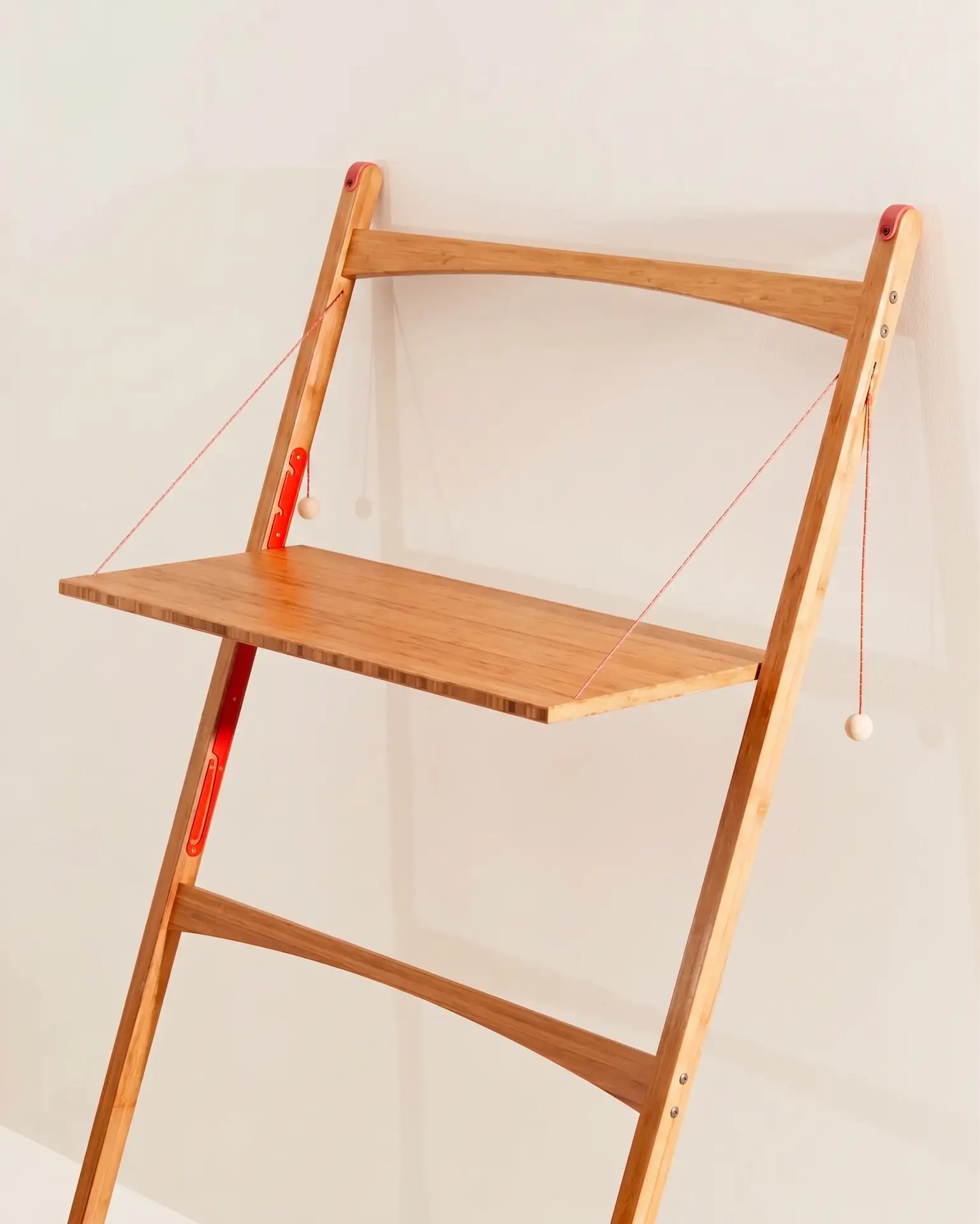
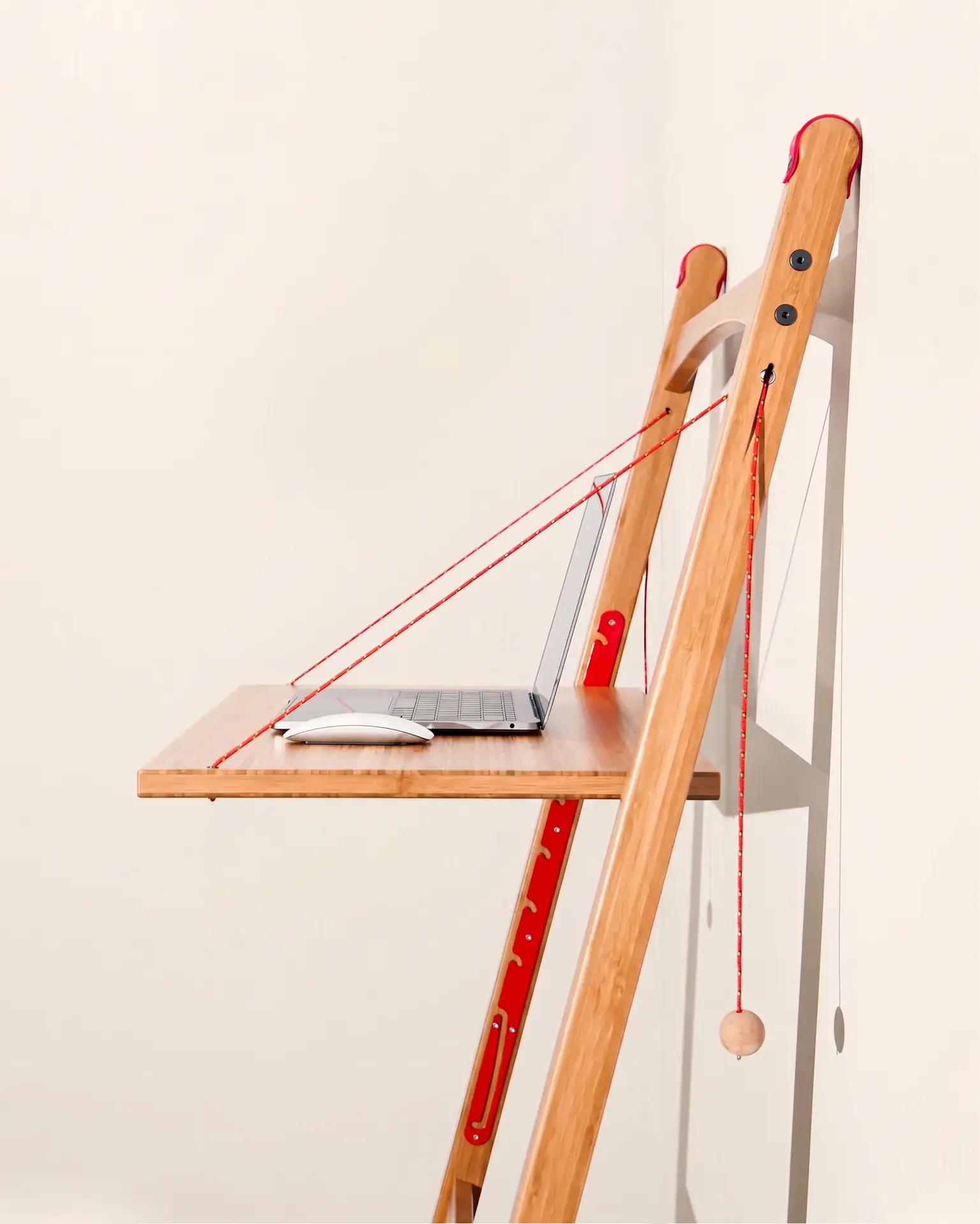
Leandesk Bamboo Folding Sit-Stand Desk – Compact Standing Desk, Space-Saving Sustainable Design
Price range: £610 through £630
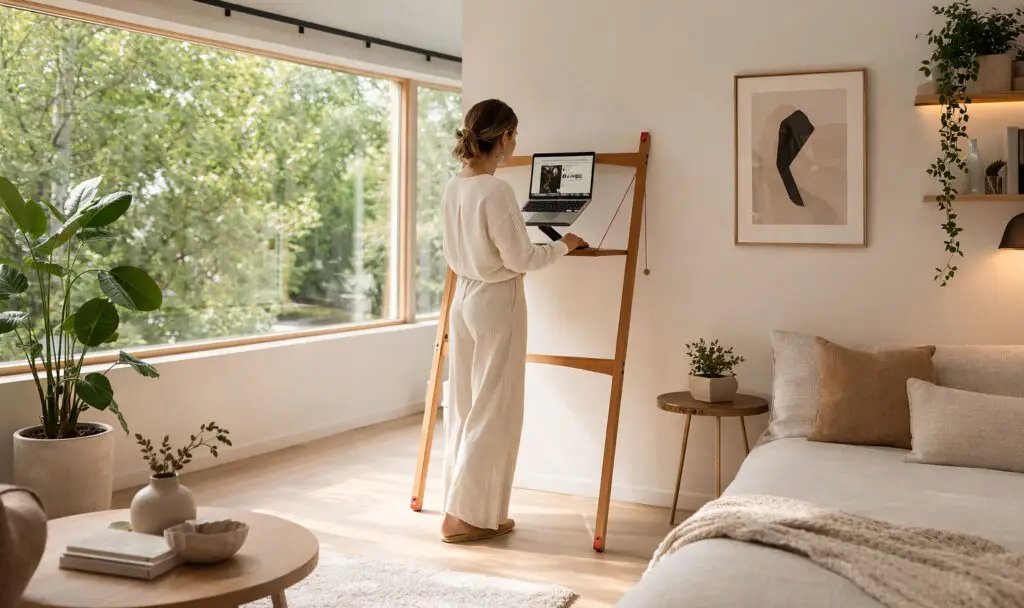
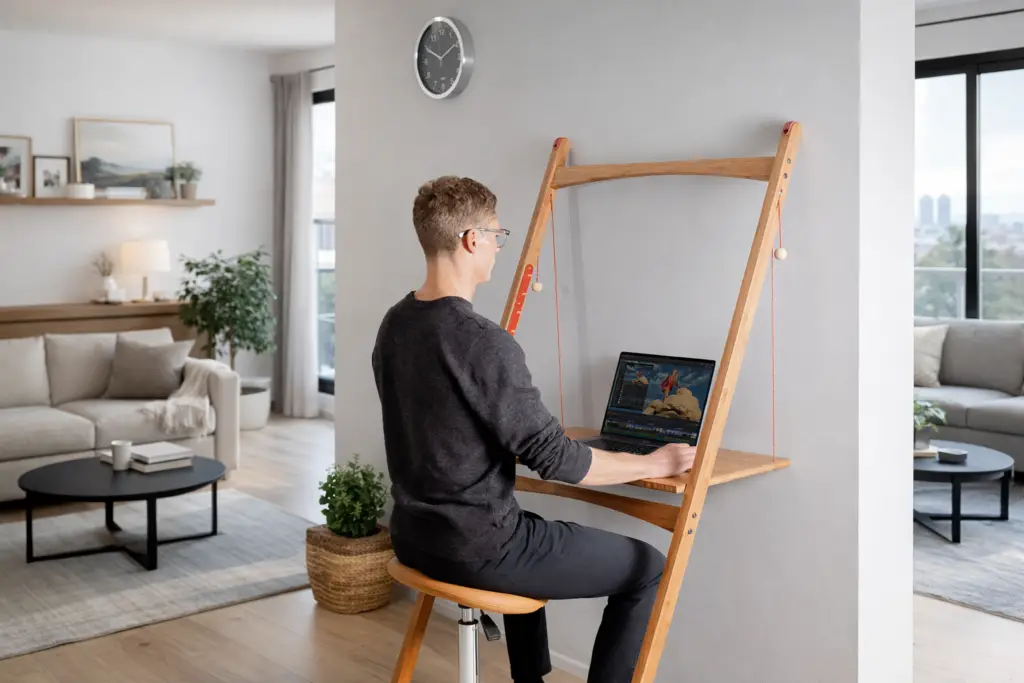
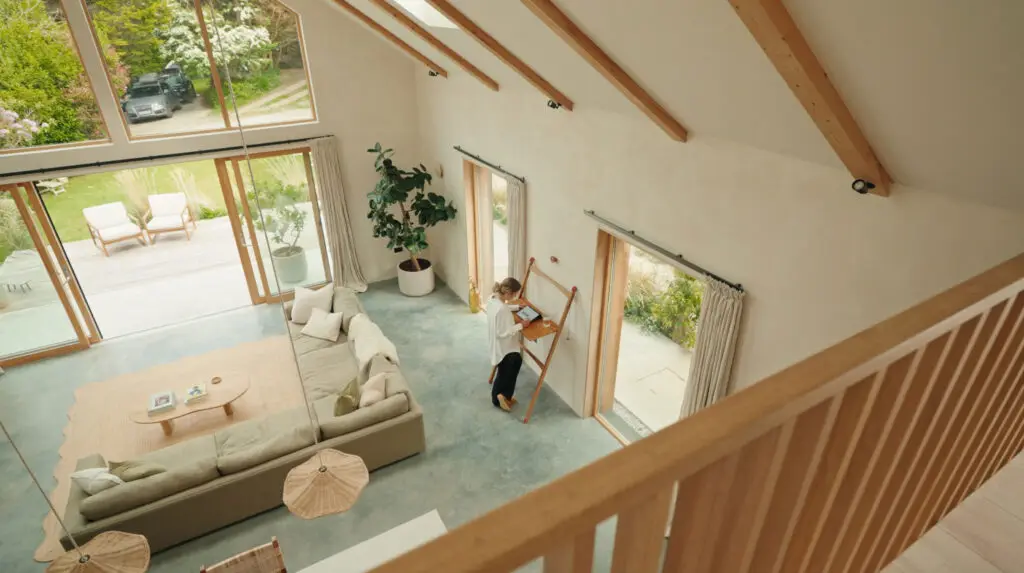
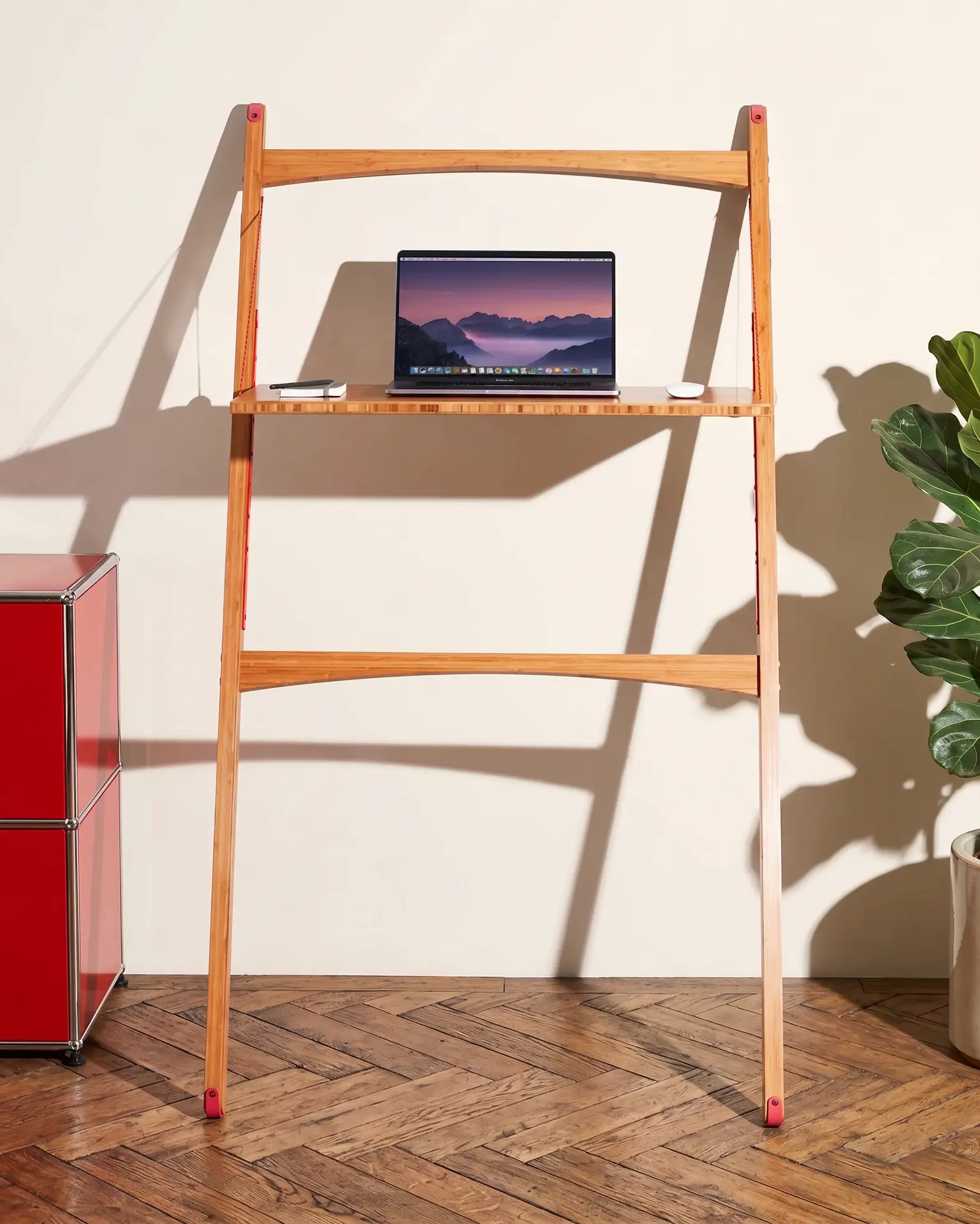
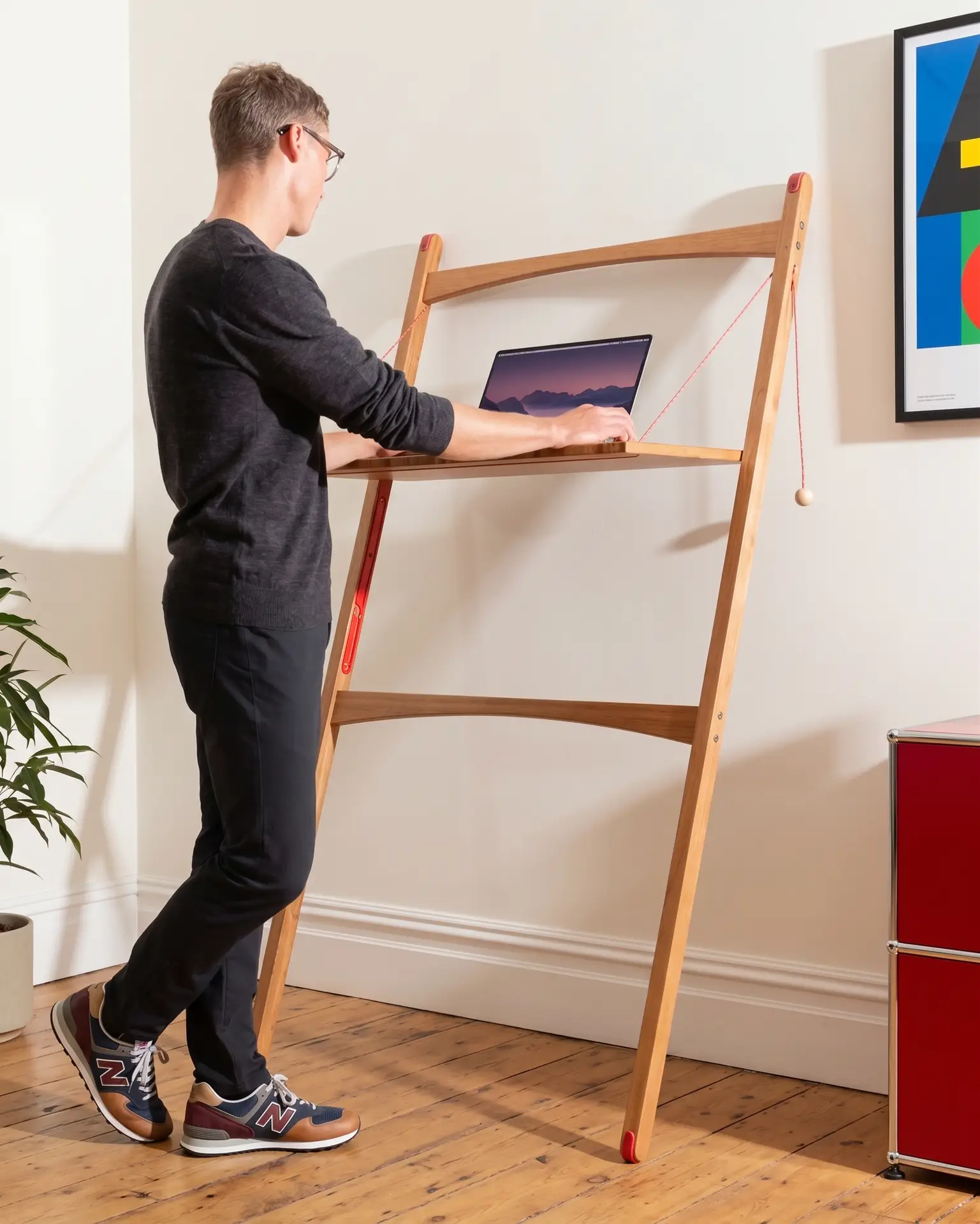
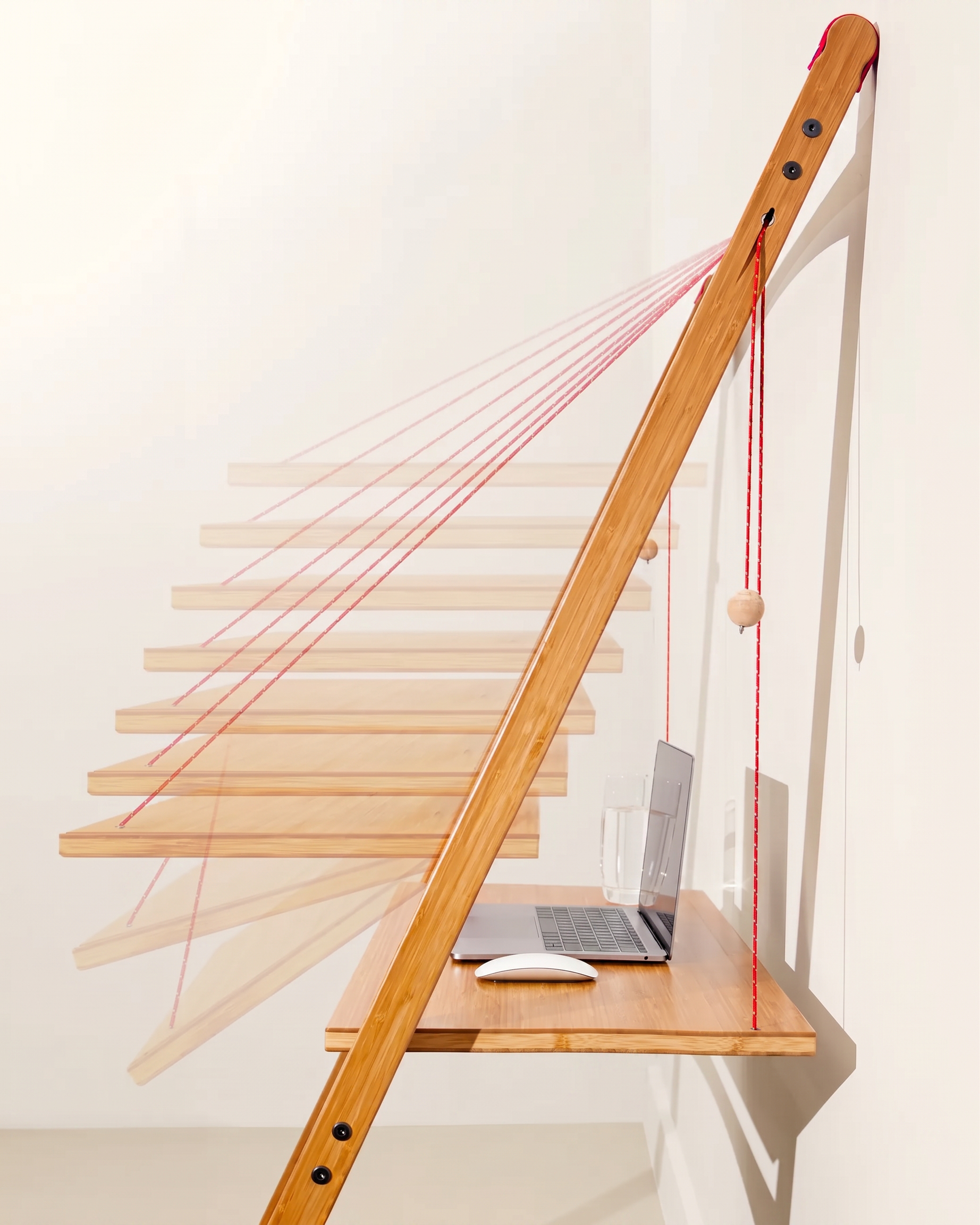
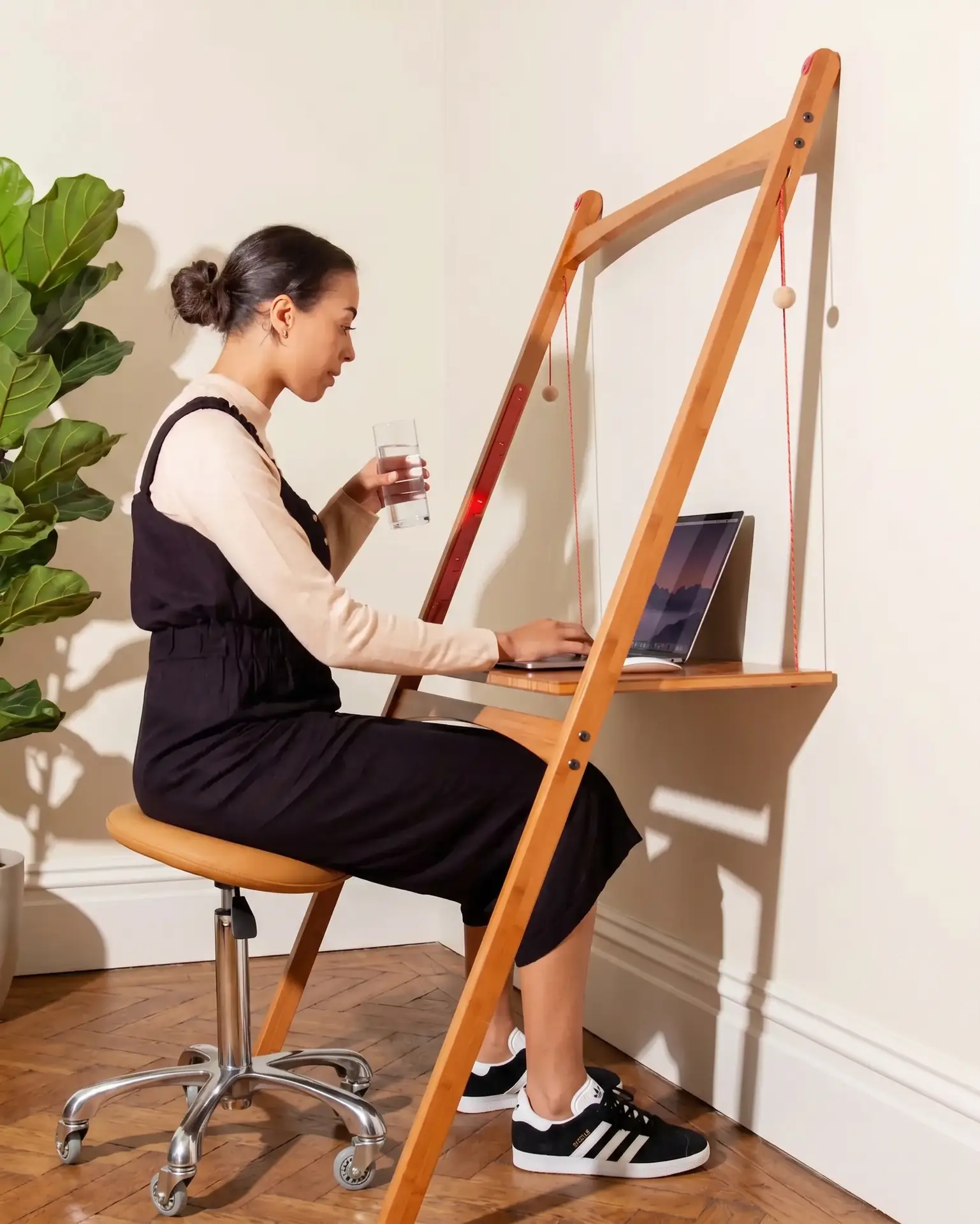
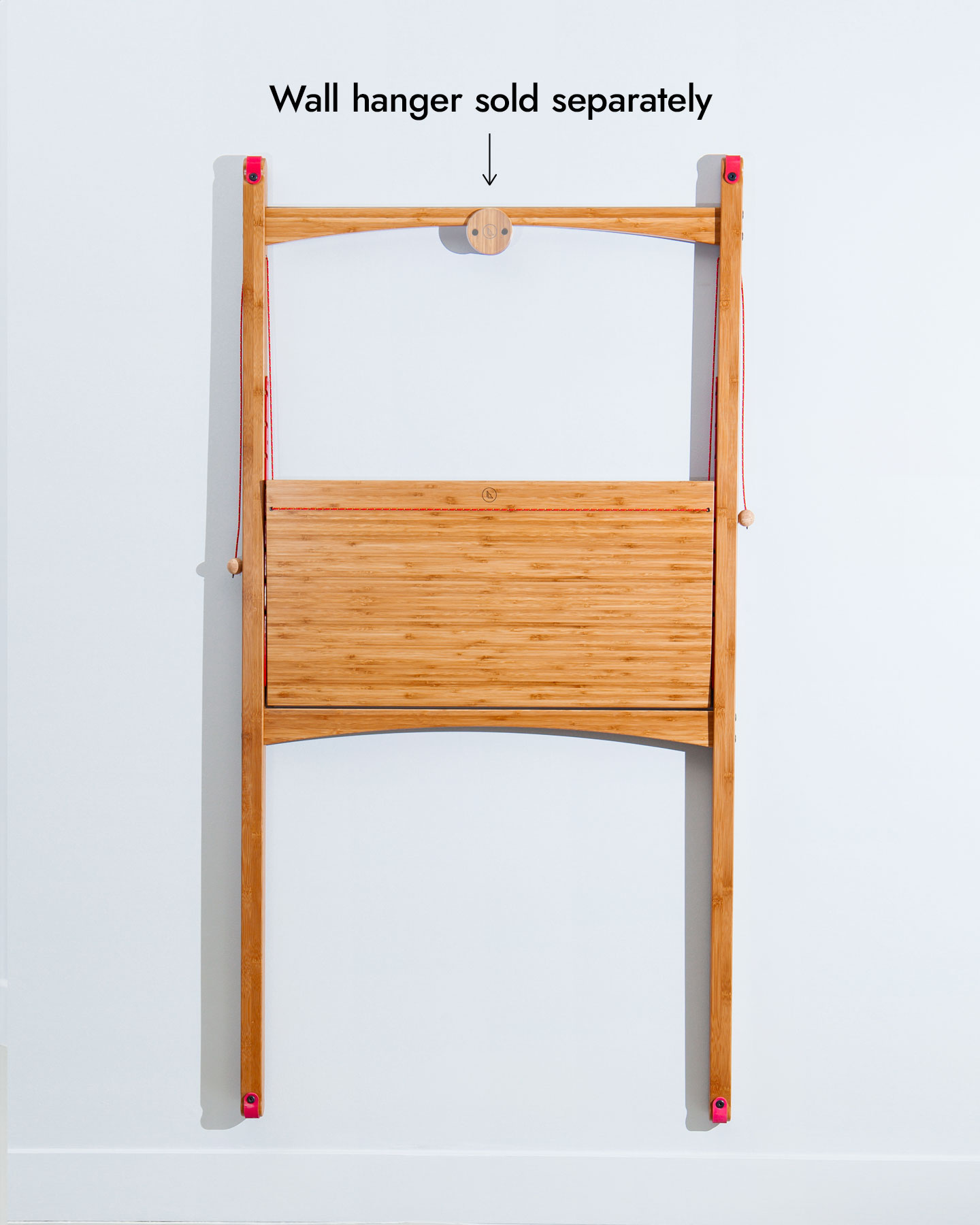
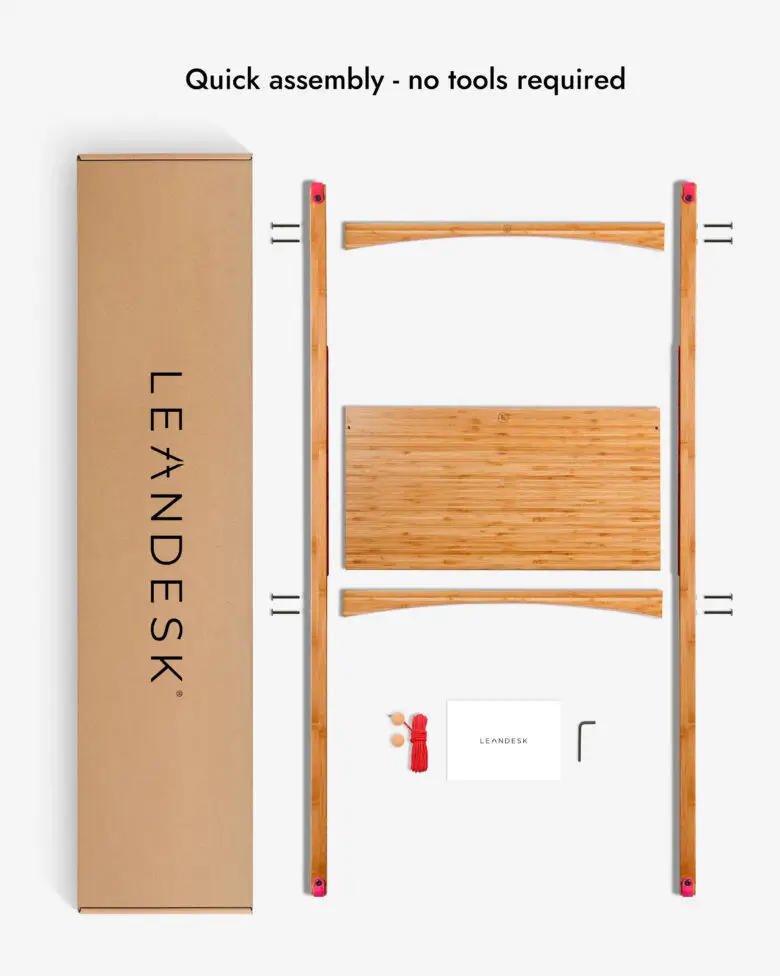
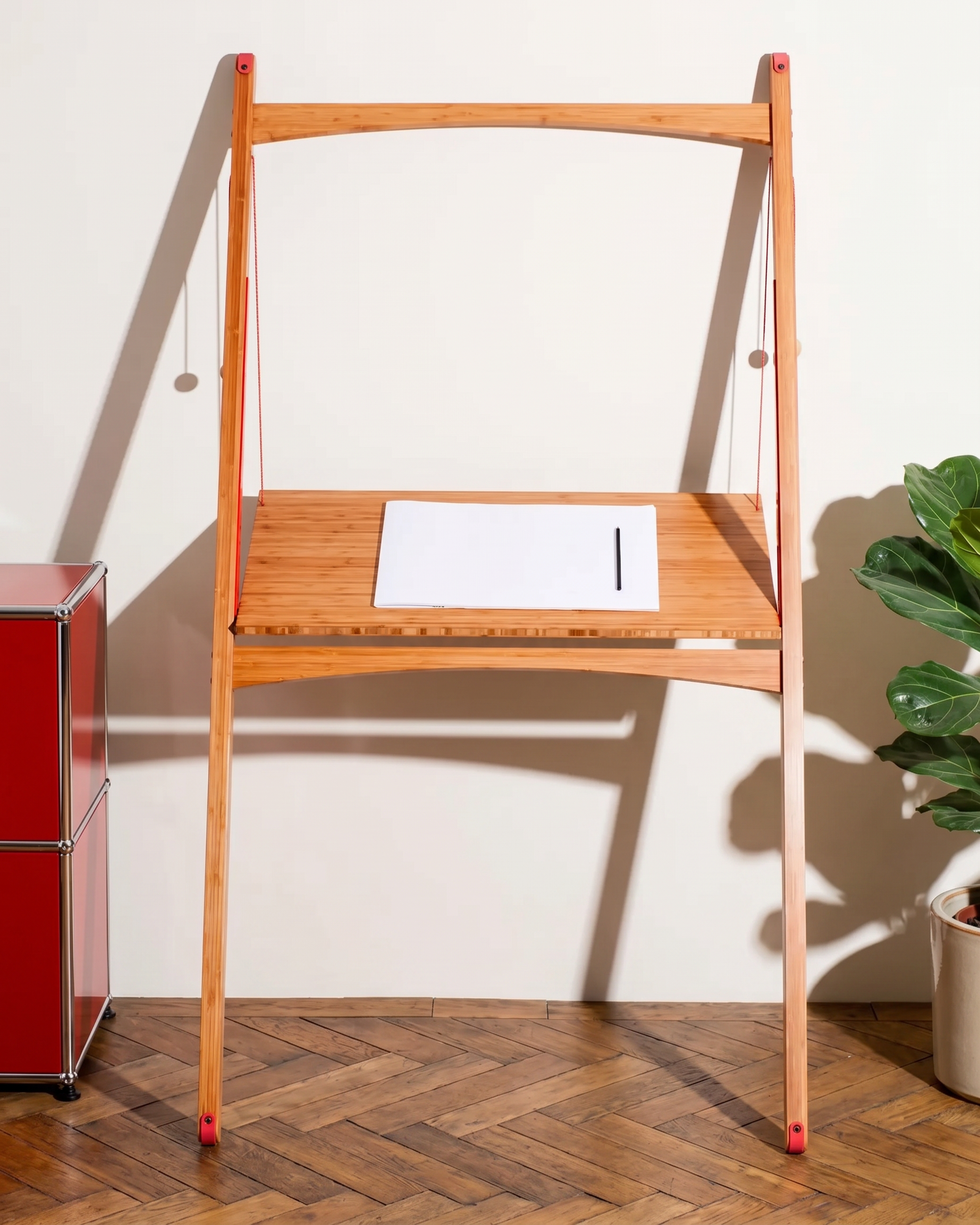
Leandesk is crafted for professionals who need a workspace as flexible and uncompromising as they are. A folding sit-stand desk that’s infinitely adjustable in height and angle, letting you work sitting or standing with ease. It folds to just 50mm for effortless storage, and is crafted from sustainable materials with ergonomic features designed to boost productivity and flexibility.
2. Work inside a wardrobe or cupboard
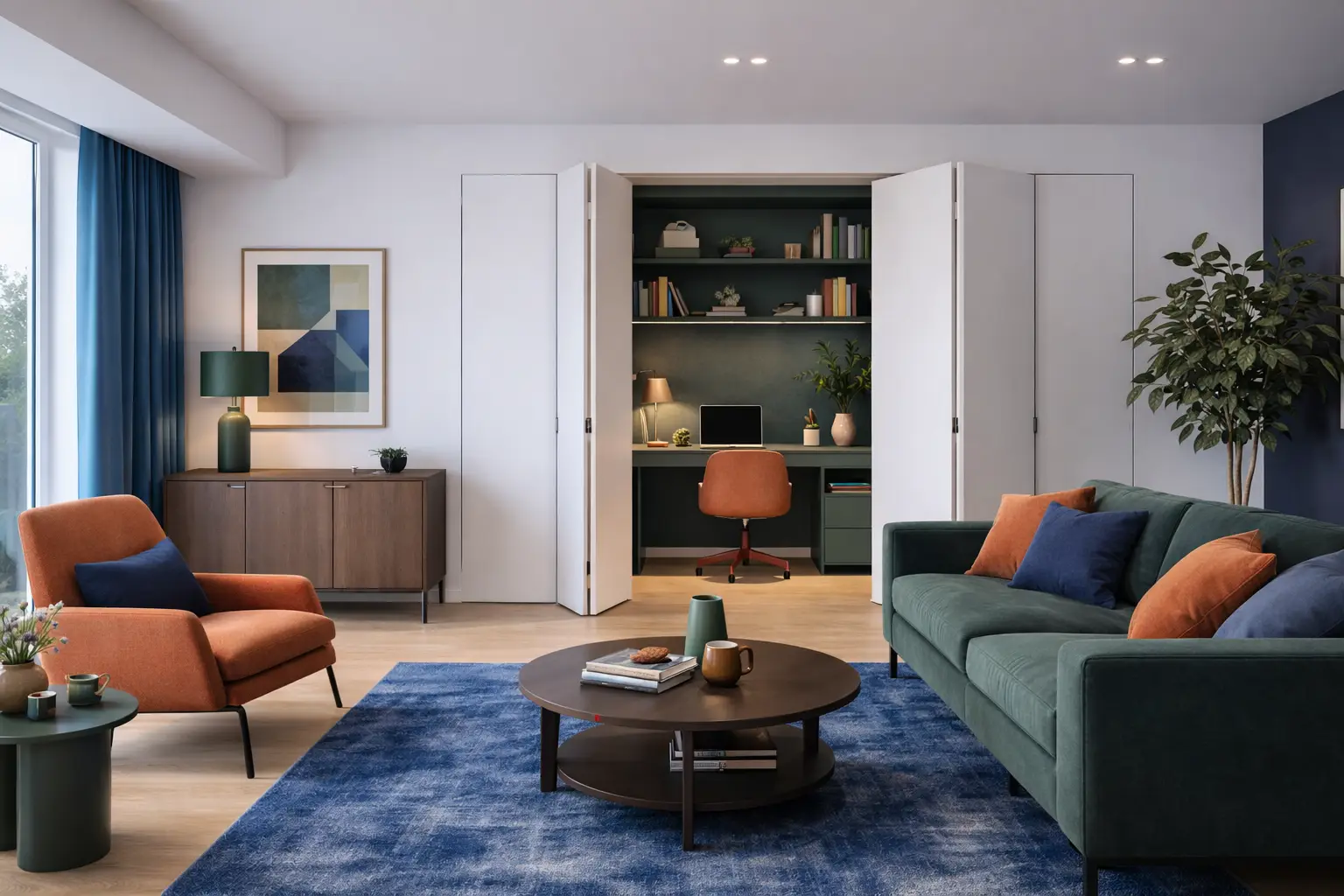
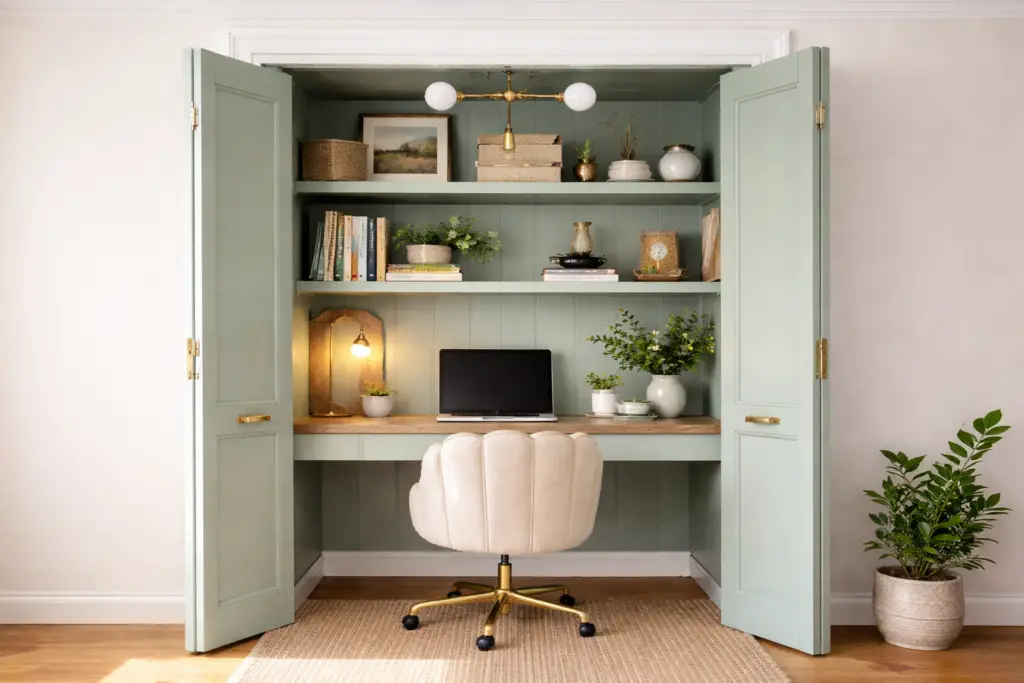
A “cloffice” — a wardrobe or built-in cupboard converted into a miniature office — is one of the most popular hidden home office ideas on social media, and for good reason. When the doors close, your entire workspace vanishes.
The concept works best with double-door wardrobes or alcove cupboards that are at least 600mm deep. Fit a shelf at desk height, mount a small LED panel light above, and add a power strip inside. Pin boards, small shelves, and cable clips on the inside of the doors make use of otherwise dead space. When you clock off, shut the doors and your office is invisible.
The downside? You’re locked to a seated position and a fixed location, with limited airflow and no option to stand. It’s a clever solution for occasional work, though anyone spending full days at a screen may find it restrictive.
3. Use the dead space behind a sofa
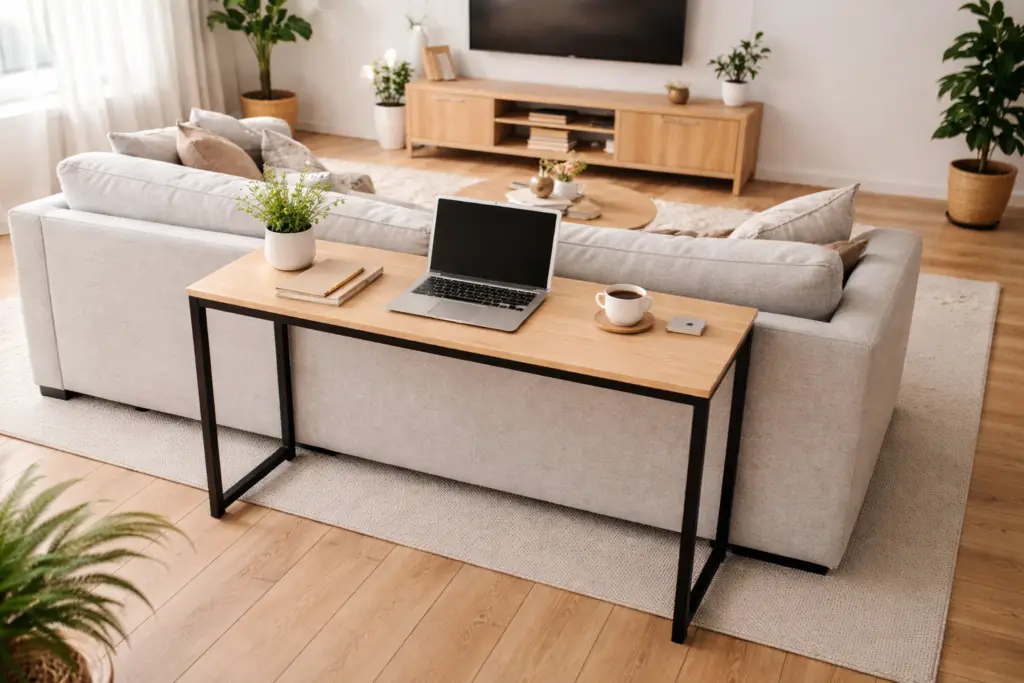
In open-plan living rooms, the back of a sofa often faces empty space or a wall. This is prime territory for a hidden home office. A narrow console table or slim folding desk placed behind the sofa creates a workspace that’s out of the main sightline — you face the wall, while the rest of the room stays untouched.
This works especially well if you use a desk that can be removed entirely when you’re not working. A folding desk that stores flat behind the sofa when not in use keeps the arrangement flexible and avoids the “permanent desk in the living room” problem.
4. Slide a desk into an alcove or nook
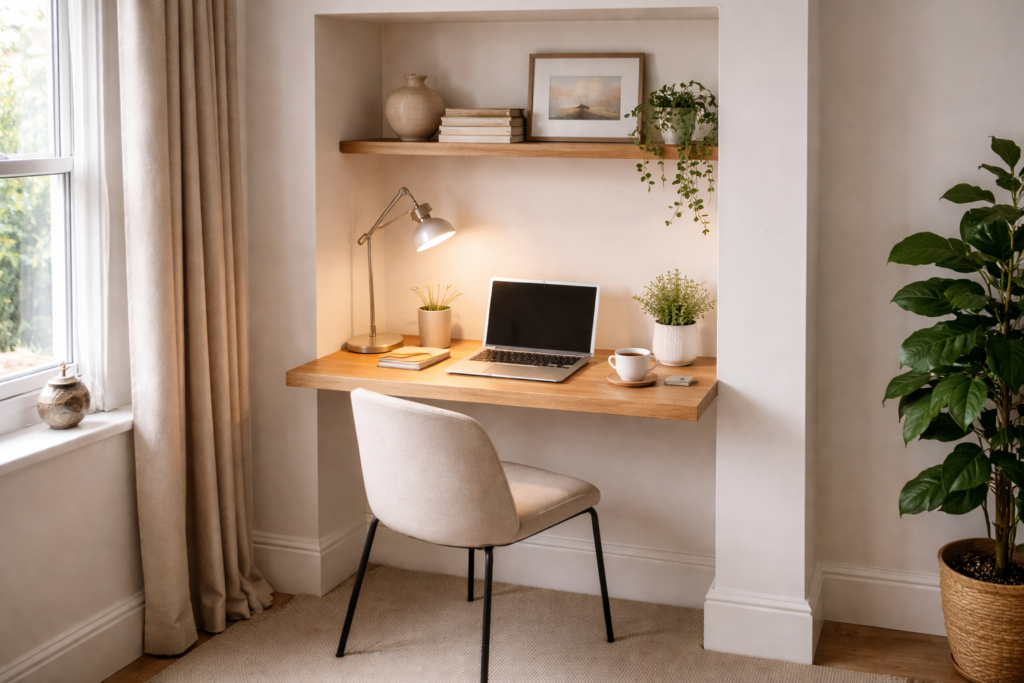
Most UK homes have at least one alcove — the recesses flanking a chimney breast, under-stair nooks, or odd corners left by an extension. These are natural candidates for a hidden workspace, especially if you can add a shelf at desk height and a curtain or sliding panel to conceal it.
A floating shelf cut to fit the alcove width, combined with a task lamp clamped to a shelf above, gives you a clean workspace with zero floor footprint. When you’re done, draw a curtain across and it’s gone. For deeper alcoves, a fold-down wall desk can work, though these tend to lack height adjustability and limit you to a fixed seated position.
5. Go vertical with wall-mounted storage
Desks take up floor space. Cables, chargers, notebooks, and stationery take up desk space. The less visible surface area your office occupies, the easier it is to hide.
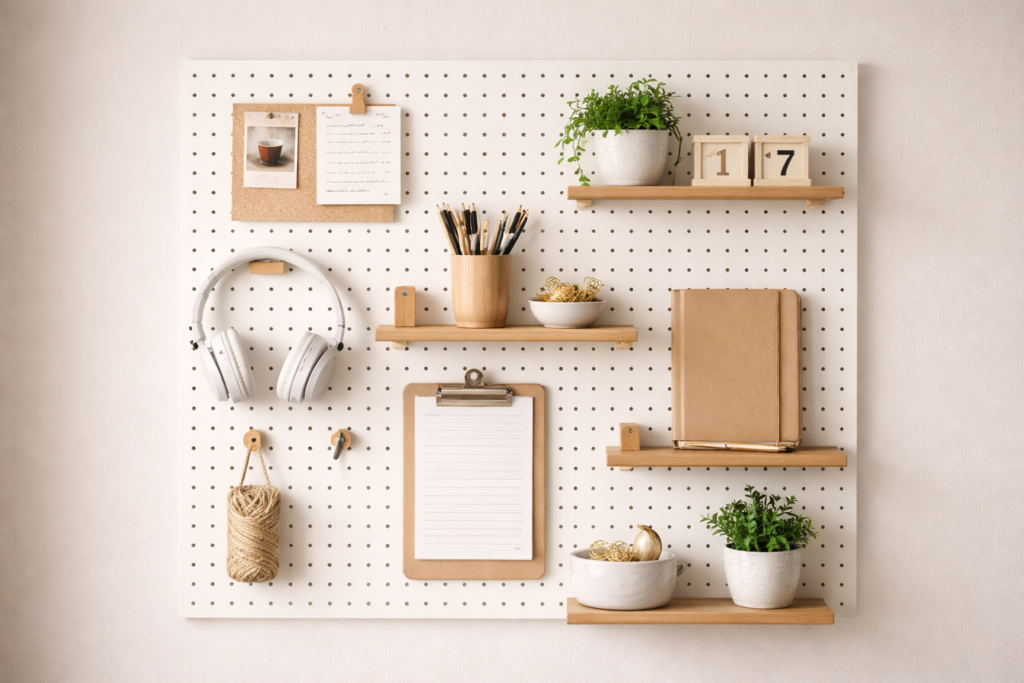
Wall-mounted pegboards, magnetic strips, and floating shelves allow you to store office essentials vertically and out of sight. A pegboard behind a door or inside a cupboard keeps supplies accessible during working hours but invisible the rest of the time. Combine this with a fold-away desk and your entire office — desk and storage — can disappear.
If you’re a renter and can’t drill into walls, adhesive-backed hooks and over-door organisers offer a damage-free alternative.
6. Digitise your paperwork (and your clutter)
One of the fastest ways to make a home office disappear is to eliminate the physical evidence. If your desk is buried under documents, folders, and sticky notes, no amount of clever furniture will make it feel hidden.
Scanning paperwork into cloud storage, switching to digital note-taking, and unsubscribing from paper correspondence dramatically reduces the physical footprint of a home office. When your entire workspace is a laptop, a charger, and a cup of tea, it’s far easier to pack everything away at the end of the day.
Read more: A practical guide to digitising your home workspace in the UK →
7. Work at a window ledge or breakfast bar
Not every hidden home office needs furniture at all. A deep window sill, a kitchen breakfast bar, or even a wide shelf fixed to an unused wall section can serve as a perfectly functional temporary desk.
The limitation here is ergonomics. Working from a breakfast bar stool or perched on a window seat may be fine for an hour or two, but it’s unlikely to support good posture over a full working day. If you find yourself working this way regularly, consider pairing it with a portable standing desk option for part of the day to vary your position and protect your back.
The NHS recommends changing positions regularly throughout the working day to reduce strain.

8. Create a ‘work zone’ with subtle room dividers
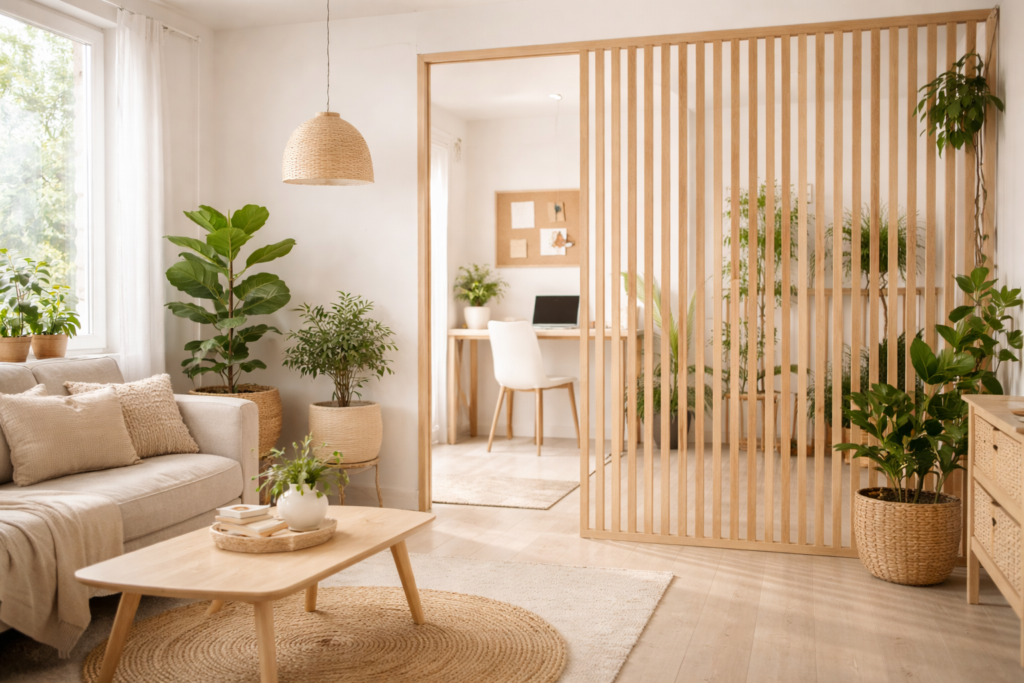
In open-plan or studio spaces, the challenge isn’t just hiding the desk — it’s creating psychological separation between work and home life. A lightweight room divider, a tall bookshelf, or even a row of tall plants can carve out a work zone without permanent structural changes.
This “broken-plan” approach is a growing trend in UK interior design. Rather than sealing off rooms with walls, homeowners are using sliding screens, internal glazing panels, and freestanding dividers to create gentle boundaries. The workspace is partially concealed, and when the divider is moved or the screen is slid back, the room returns to its full open-plan layout.
A folding desk placed behind a room divider offers the best of both worlds: a dedicated work zone during the day that completely disappears in the evening.
9. Use a hallway, landing, or under-stair space
Hallways, landings, and the space beneath stairs are among the most underused areas in UK homes. With a wall-mounted shelf or a folding desk that can lean against the wall when not in use, these transitional spaces become surprisingly effective workstations.
The trick is keeping the setup minimal so it doesn’t obstruct movement through the space. A slim desk, a wall-mounted shelf for a few essentials, and good lighting are all you need. Under-stair spaces in particular can feel surprisingly private and enclosed — a natural fit for focused work.
Related: Hideaway desk for small spaces — smart fold-away solutions for modern homes →
10. Invest in furniture that works as hard as you do
The best hidden home office ideas aren’t just about clever placement — they’re about choosing furniture that’s designed to appear and disappear as your day demands.
Traditional desks, even compact ones, are always “on.” They sit in the room permanently, accumulating clutter and signalling that work is never quite finished. A desk that folds away changes this dynamic entirely. When you fold it down, store it, or hang it on the wall, you’re physically closing the boundary between work and rest. That small ritual matters for your wellbeing, not just your floor space.
This is exactly why Leandesk was designed the way it was. It’s an ergonomic, sit-stand workstation that folds to 50mm flat. Made from sustainable bamboo with plastic-free packaging, it’s built to do more with less. It doesn’t need electricity. It doesn’t need a dedicated room. It just needs a wall — and when you’re done, it gives you your home back.
Shop the Leandesk Bamboo Folding Sit-Stand Desk →

Making it work: a quick checklist
Whatever approach you choose, these principles will help you build a hidden home office that’s comfortable, productive, and easy to put away:
- Choose furniture that stores flat or folds away completely
- Go digital wherever possible to reduce physical clutter
- Use vertical storage — walls, doors, and pegboards — to free up surfaces
- Prioritise ergonomics: a space-saving desk should still support good posture
- Create a clear end-of-day ritual: fold, store, close, done
Hybrid working is here to stay. ONS data from late 2024 shows that around 26% of UK workers now split their time between home and the office. For most, that means the home workspace needs to earn its keep — comfortable enough to work at, but willing to disappear when the day ends.
The best hidden home office isn’t one you have to hide. It’s one that was designed to do the hiding for you.
Explore the full Leandesk range →
Related reading on Leandesk.com
- Hideaway Desk for Small Spaces: Smart Fold-Away Solutions for Modern Homes
- A Practical Guide to Digitising Your Home Workspace in the UK
- Boost Your Productivity by Working Leaner
- 5 Workspace Wellness Tips to Boost Comfort and Productivity
- Designing Eco-Friendly Workspaces with Leandesk
- Desks for Teenager’s Bedrooms: How to Create the Perfect Space-Saving Study Setup