1. Folding desks that disappear when you’re done
If you don’t have a dedicated office, a folding desk is arguably the smartest desk idea for small spaces. It gives you a full-size workspace when you need it and vanishes when you don’t.
The category ranges widely. At the budget end, simple trestle-style folding tables do the job but tend to wobble and lack any height adjustment. At the premium end, purpose-built folding workstations offer ergonomic positioning, real stability, and a form factor thin enough to slide behind a door or hang on a wall.
What to look for: a folded depth of under 100mm (anything more is hard to store discreetly), a load capacity of at least 30kg for a laptop and accessories, and ideally some form of height adjustment so you’re not locked into a single working position.
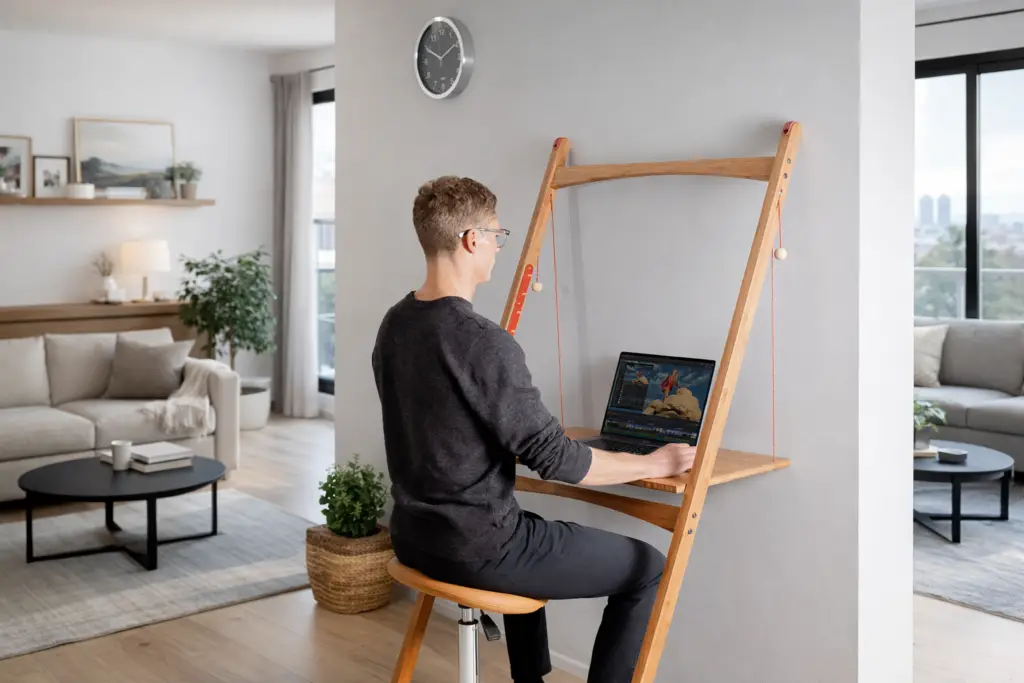
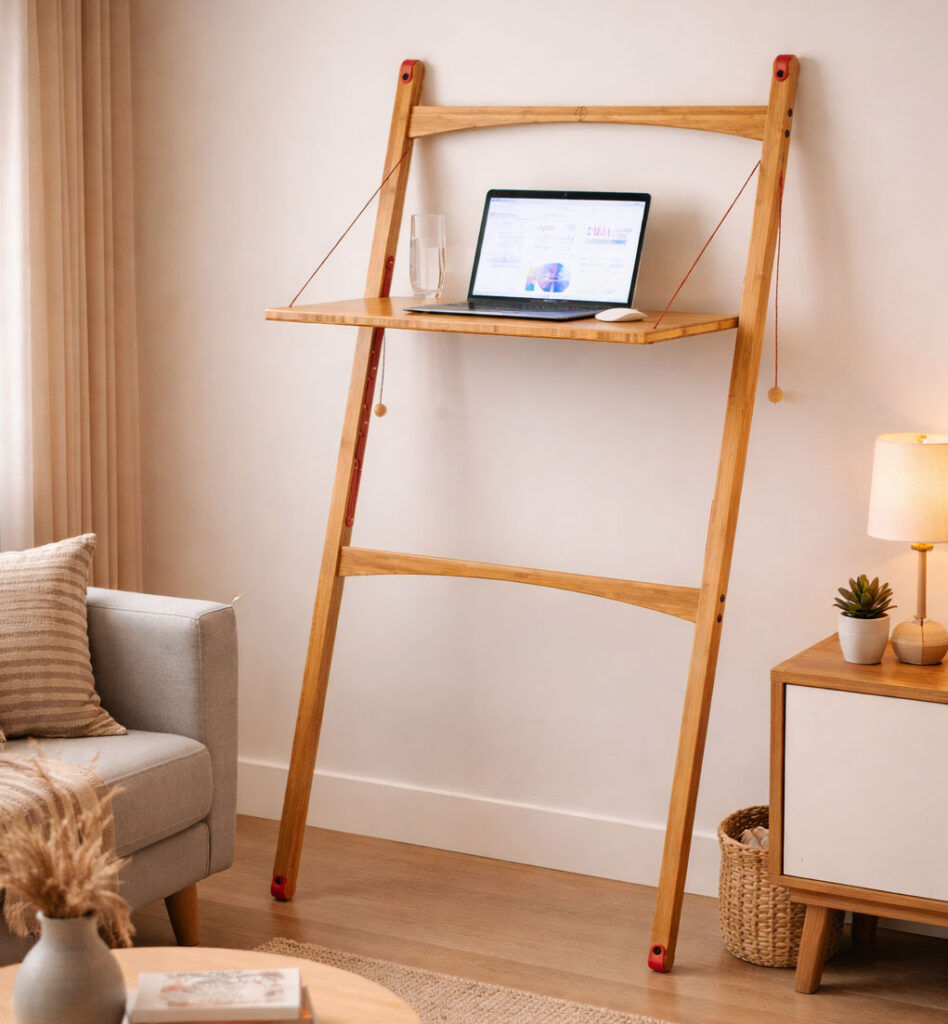
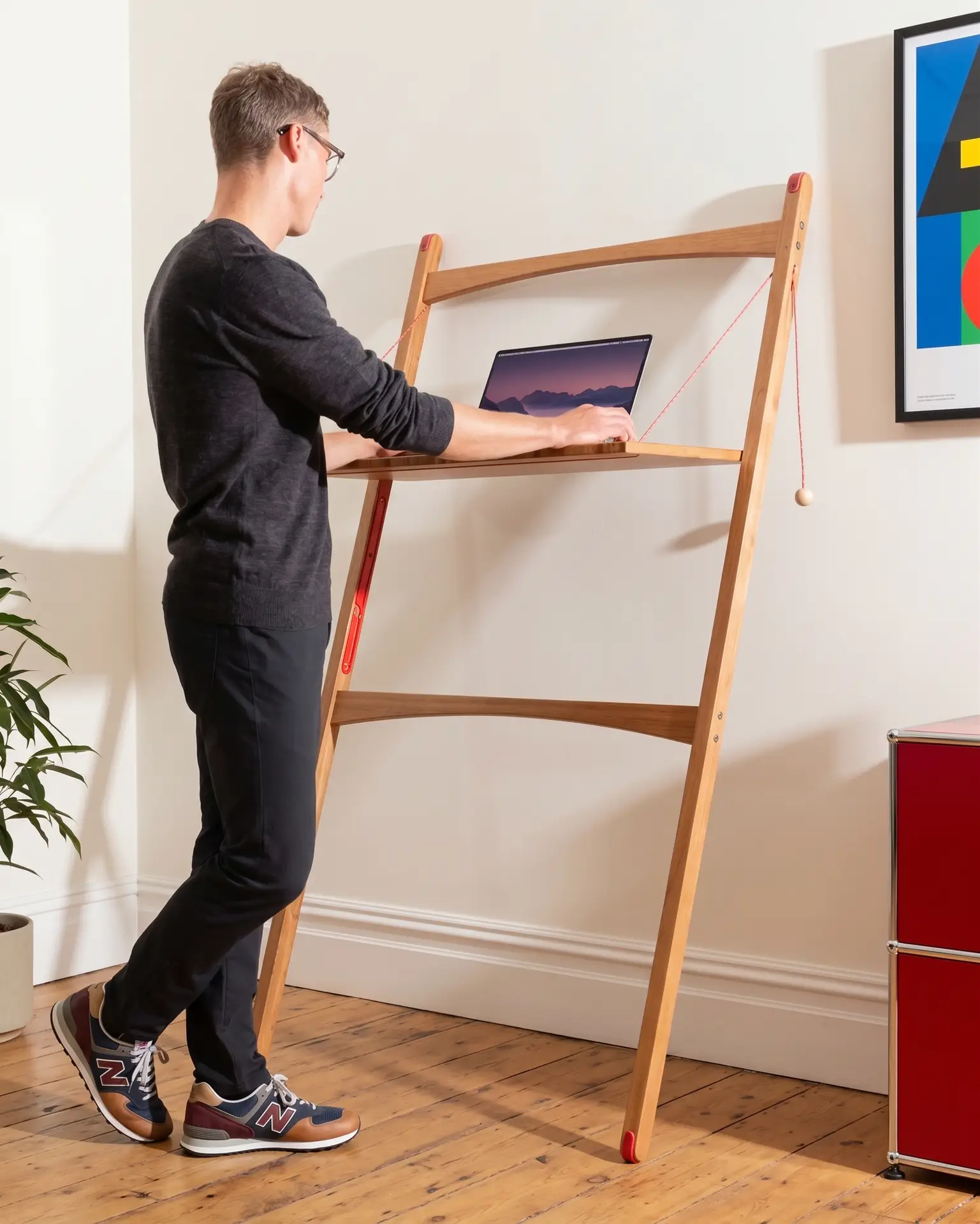
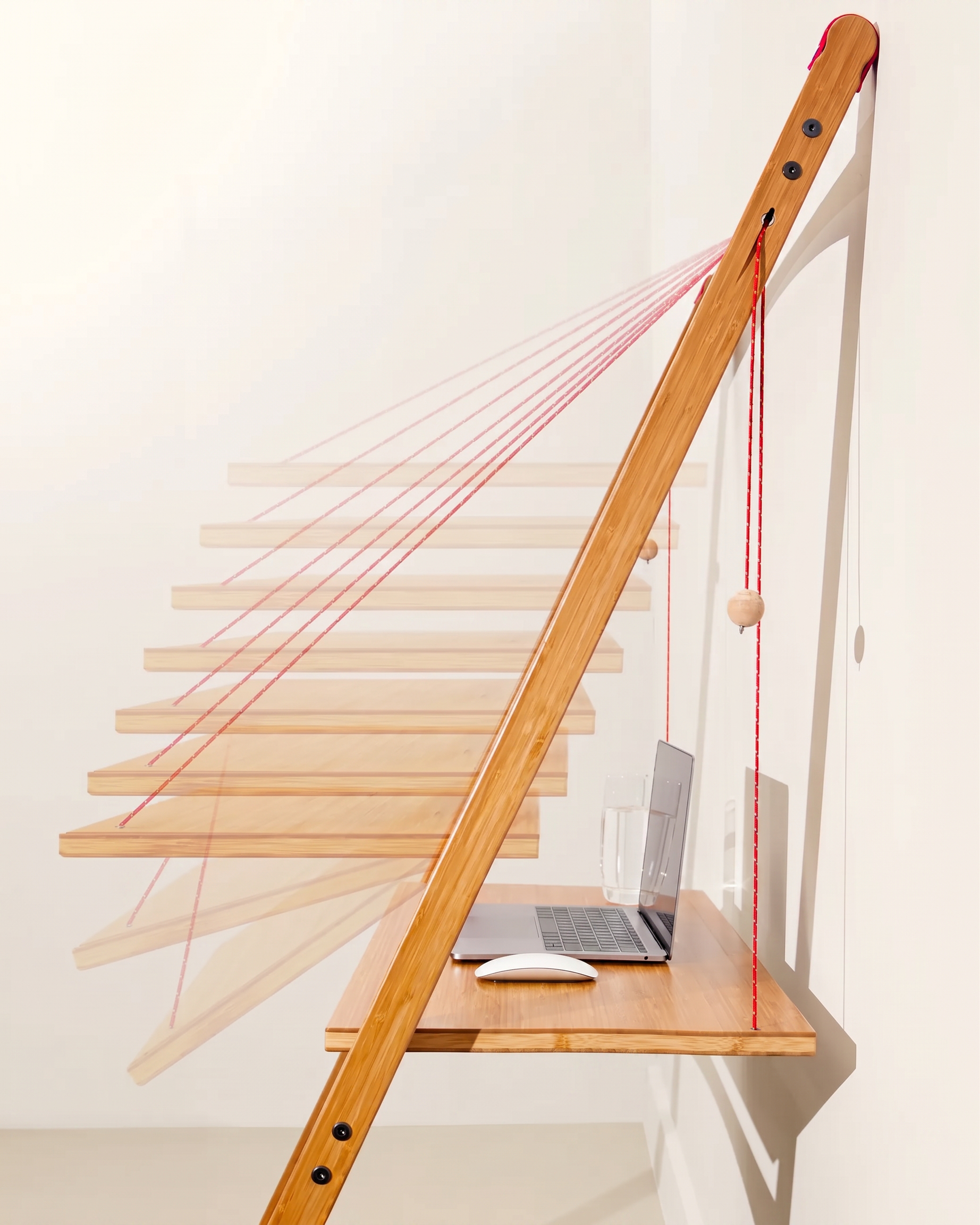
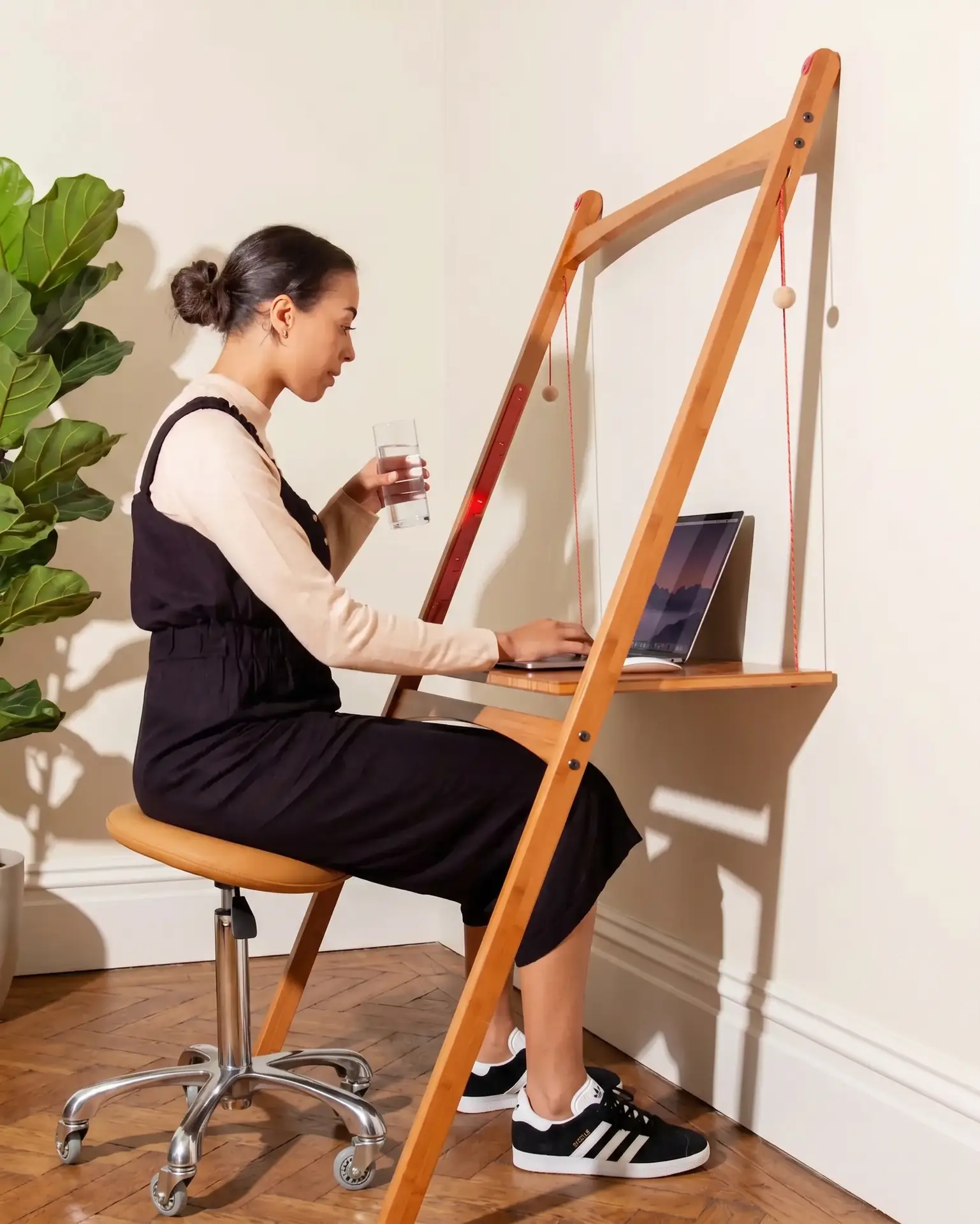
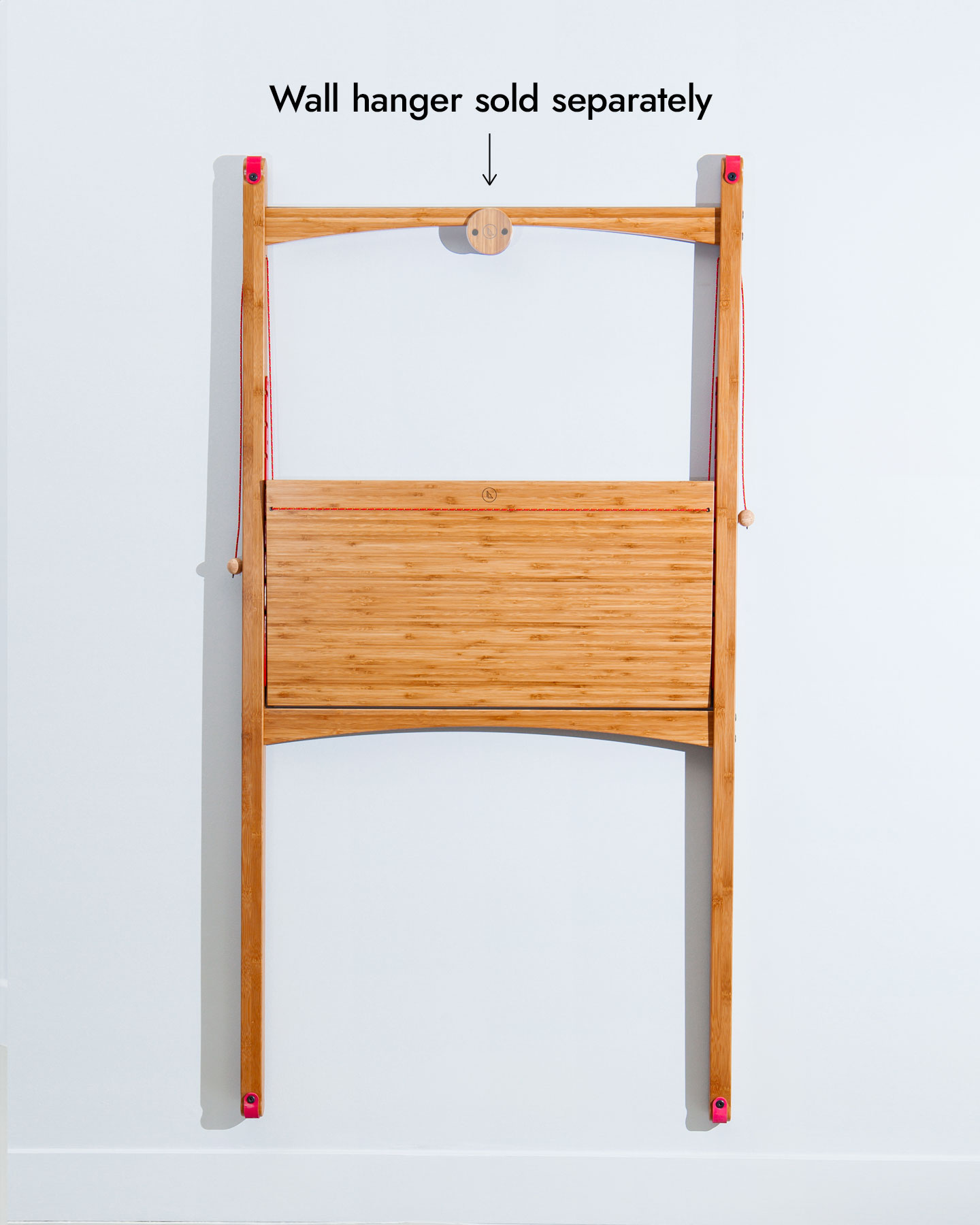
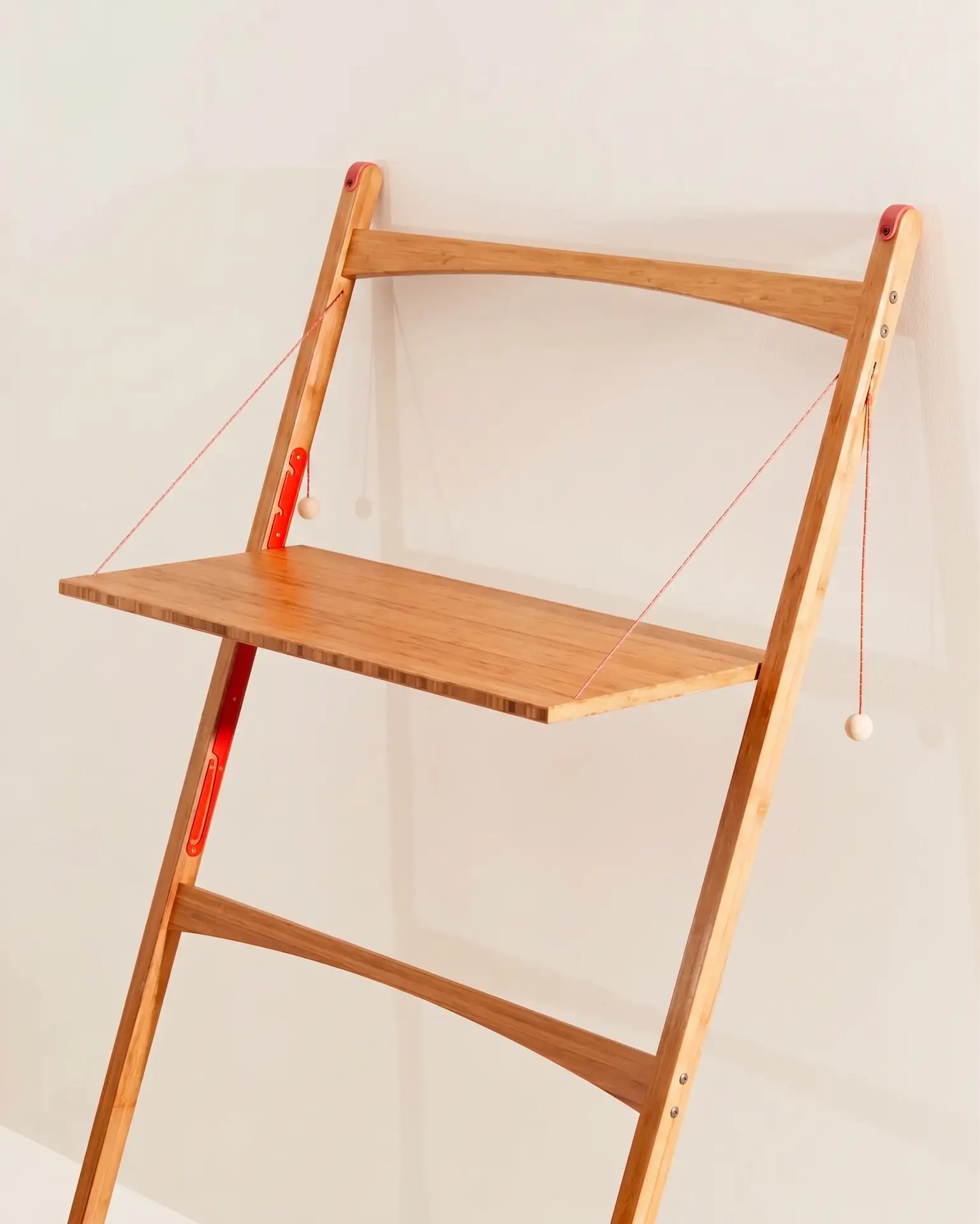
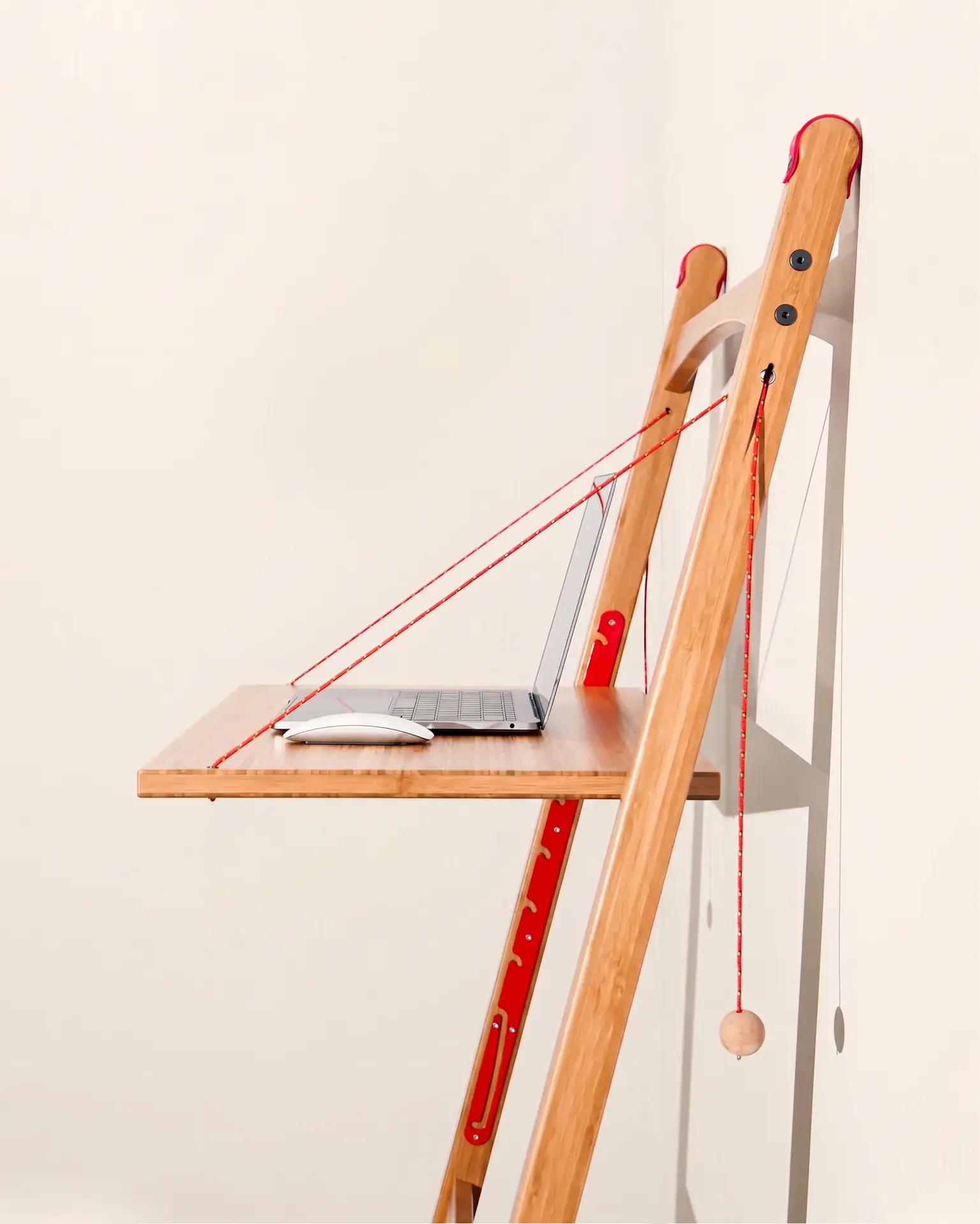
Leandesk was designed specifically for this purpose. It folds to just 50mm, supports up to 65kg, and adjusts to any sitting or standing height using its rack-and-cord mechanism — no electricity needed. It’s a genuinely ergonomic sit-stand desk that happens to fold flat when you clock off.
Discover the Leandesk Bamboo Folding Sit-Stand Desk →
2. Floating wall desks for zero floor footprint
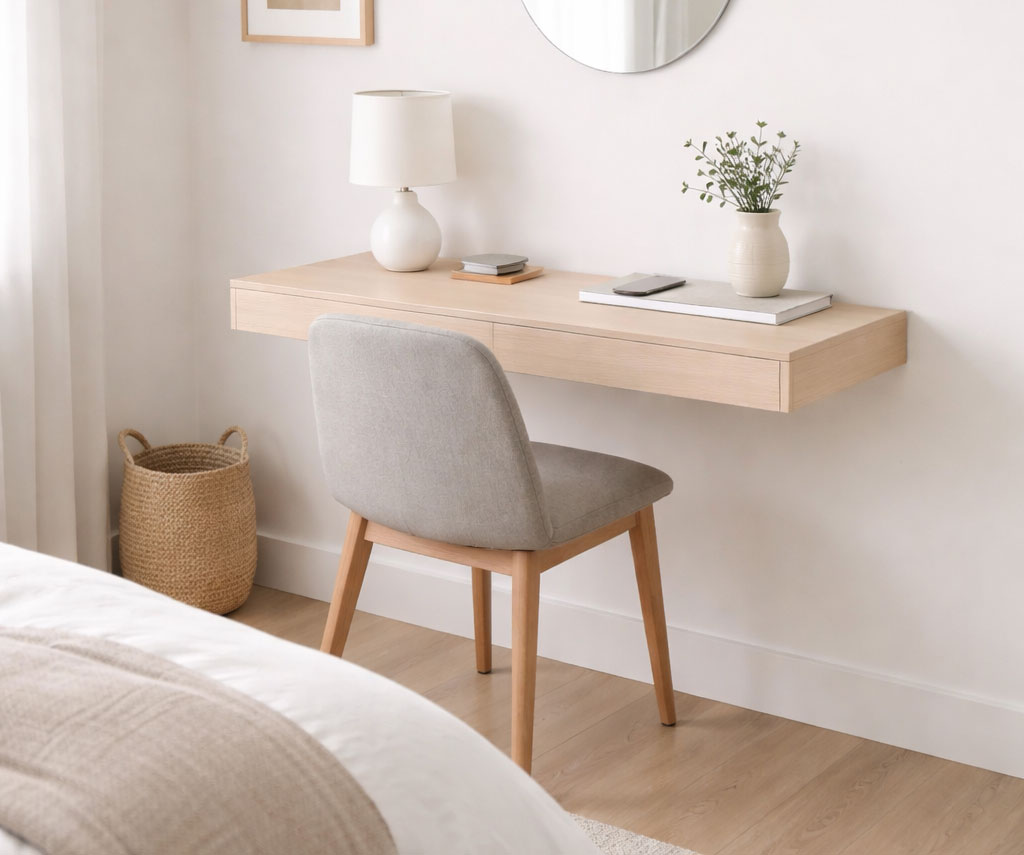
A floating desk mounts directly to the wall, eliminating legs and freeing up every centimetre of floor space beneath it. This makes it one of the cleanest small space desk ideas for bedrooms, hallways, and box rooms where floor area is at a premium.
Most floating desks are a fixed shelf with a bracket system. Some include a fold-down mechanism so the desk can be lifted flush against the wall when not in use — a practical option for multi-use rooms. The trade-off is that you’re fixed to one location (wherever the brackets are drilled), and standing use isn’t usually an option.
Best for: bedrooms, narrow hallways, and renters with understanding landlords who allow wall fixings.
3. Corner and L-shaped desks that use dead space
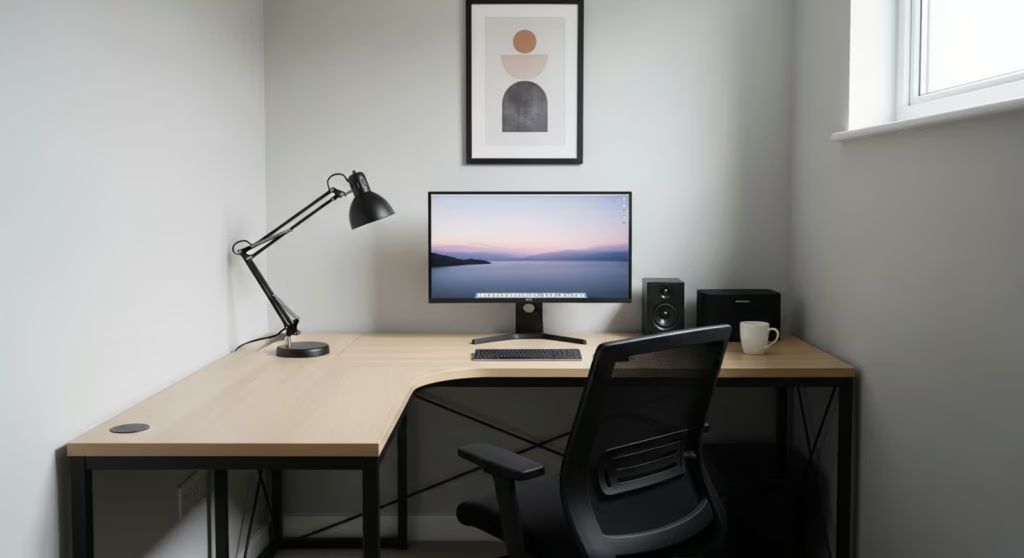
Corners are the most underused real estate in any small room. A desk designed to sit into a corner — whether L-shaped, triangular, or custom-cut — takes advantage of space that would otherwise sit empty, while keeping the main floor area open.
L-shaped desks in particular offer a surprising amount of surface area relative to their footprint, making them useful if you need to spread out with a monitor, notebook, and reference materials. The downside is that they’re permanent fixtures — they don’t fold away — and cheaper models can feel flimsy at the corner join.
Best for: box rooms and spare bedrooms where the desk can stay in place permanently.
4. Ladder desks for vertical storage and workspace in one
A ladder desk leans against a wall like a bookshelf, combining a small desktop at sitting height with open shelves above. It’s a smart option when you need both a workspace and storage but don’t have room for separate pieces of furniture.
The desk surface on most ladder designs is relatively shallow — enough for a laptop but rarely enough for a full monitor setup. Stability can also be an issue; because the design relies on leaning rather than being fixed to the wall, heavier use may cause the whole unit to shift.
Best for: living rooms and bedrooms where you want the desk to double as a display piece.
5. Console tables that moonlight as desks
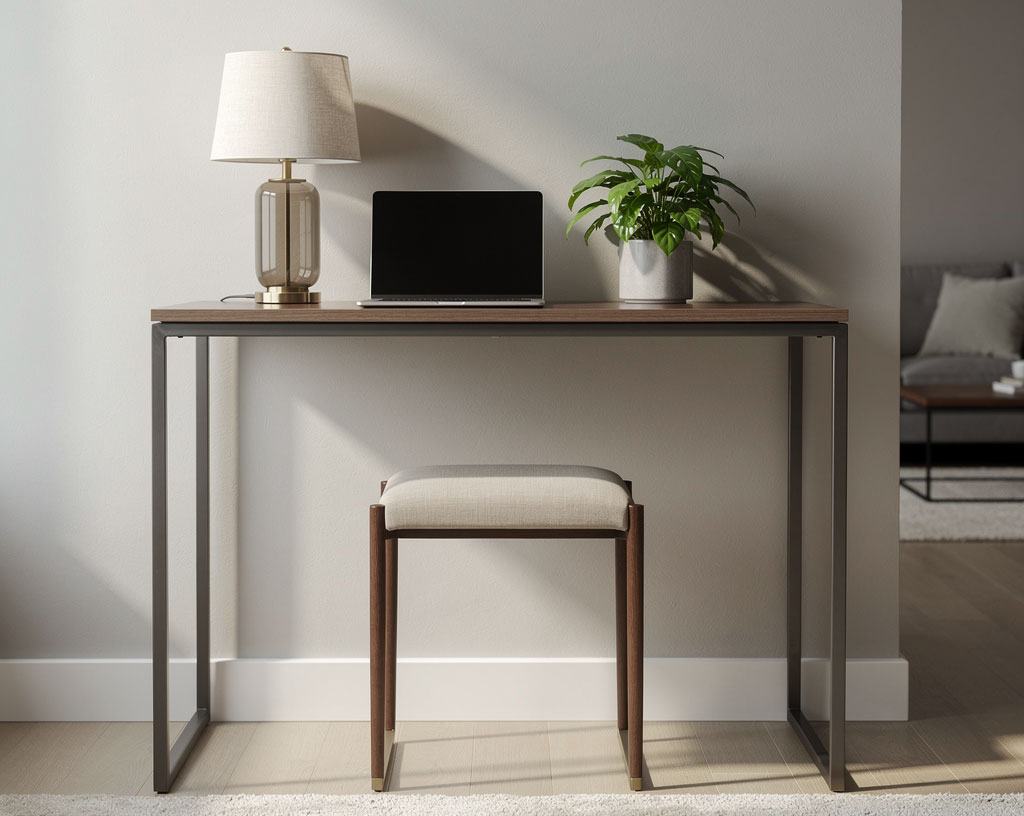
A slim console table placed against a wall or behind a sofa can serve perfectly well as a temporary desk. Because console tables are designed to be narrow (typically 25–35cm deep), they sit flat against a wall without projecting into the room.
This is a popular desk idea for small living rooms and hallways, particularly if you prefer a piece of furniture that looks like decor rather than office equipment. The limitation is depth — there’s rarely enough room for a monitor and keyboard side by side — so this works best for laptop-only setups.
Best for: living rooms, hallways, and entryways where you want a workspace that doesn’t look like a workspace.
6. Alcove and nook workstations
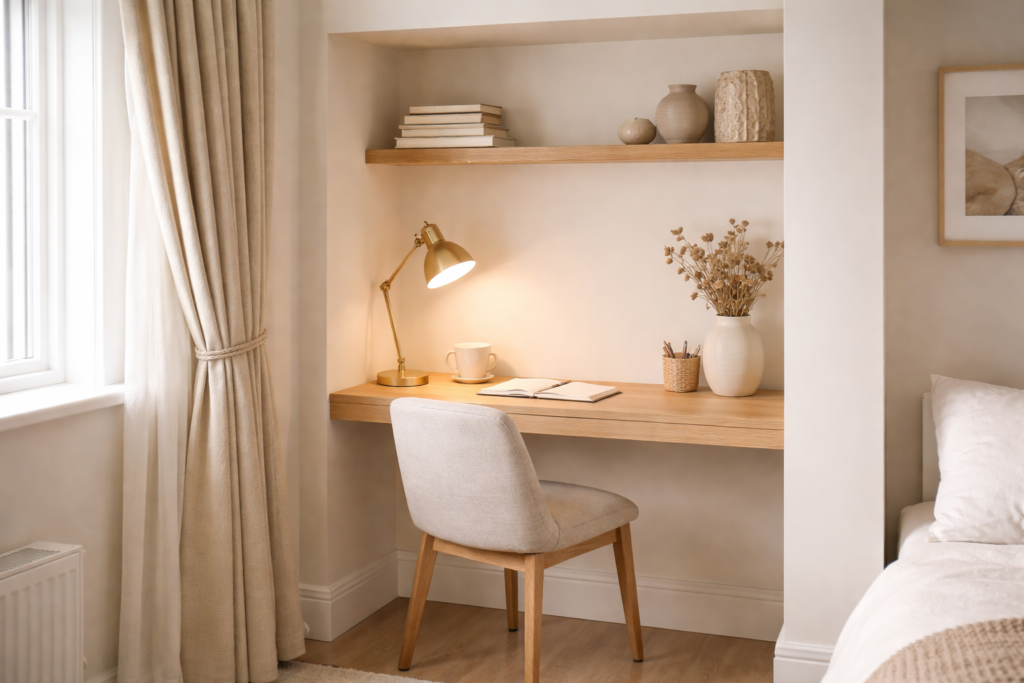
The recesses beside chimney breasts, under-stair nooks, and awkward corners left by extensions are all prime candidates for a built-in workspace. A floating shelf cut to the width of an alcove, combined with a task lamp and a power strip, creates a workspace with zero free-standing furniture.
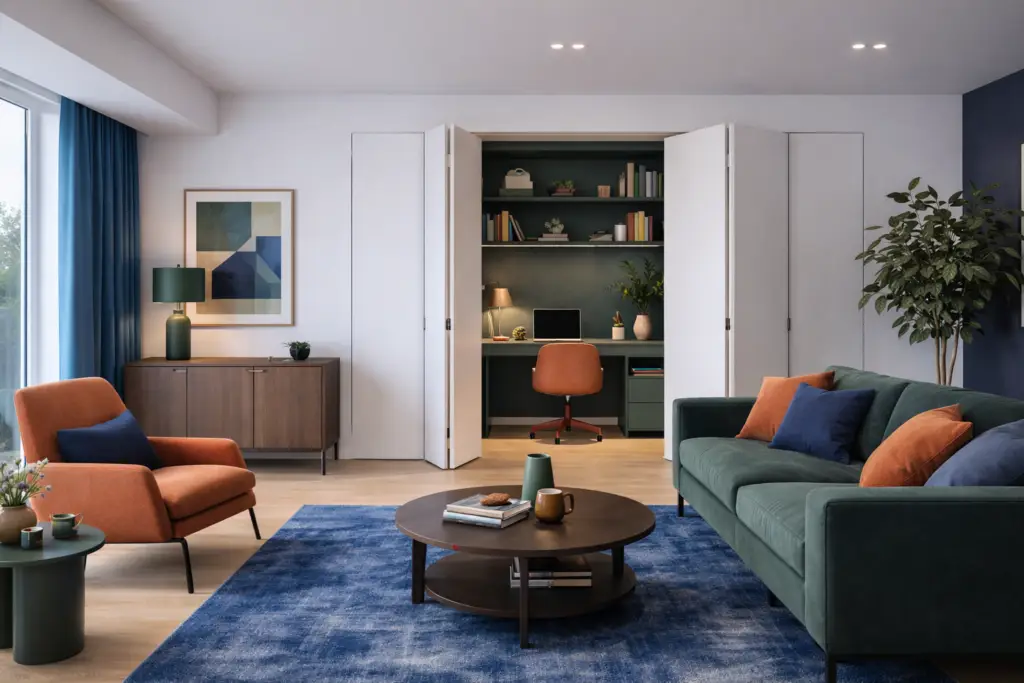
For a cleaner look, add a curtain, roller blind, or sliding panel across the alcove opening. When drawn, the workspace disappears entirely — one of the simplest and most effective ways to hide a home office in plain sight.
If you’d rather not commit to a permanent shelf, a freestanding folding desk that fits into the recess offers the same space-saving benefit with added flexibility. When work ends, fold the desk and slide it into the alcove for storage.
Read more: Hideaway desk for small spaces — smart fold-away solutions for modern homes →
7. Standing desk converters for existing surfaces
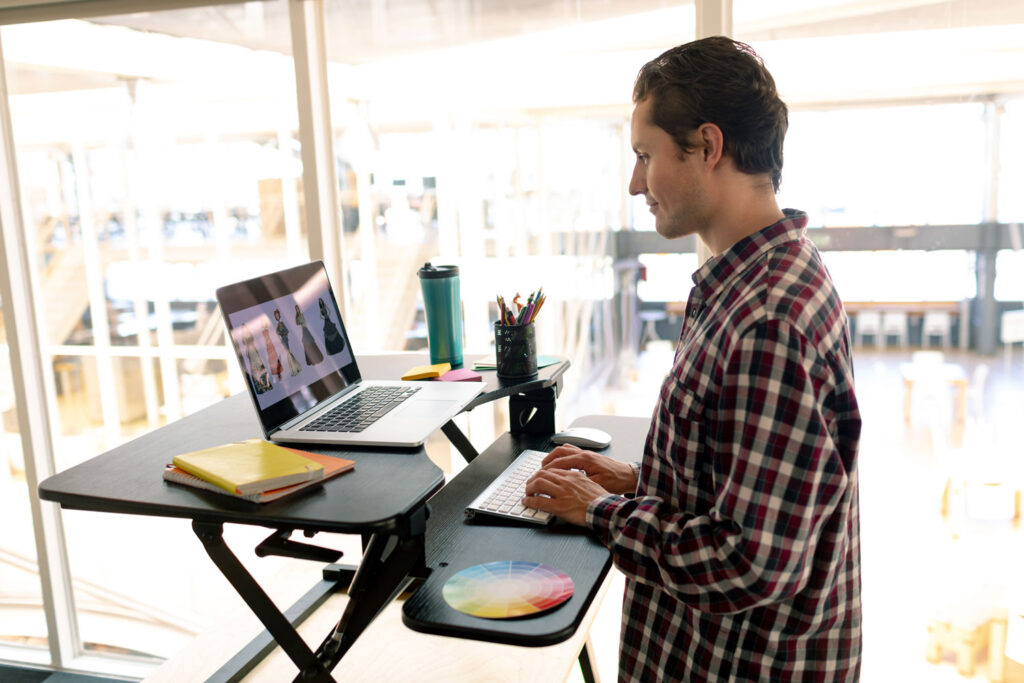
If you already have a table, shelf, or countertop you can work from, a standing desk converter sits on top of it and raises your laptop or monitor to standing height. These are spring-loaded or gas-assisted platforms that adjust vertically, letting you switch between sitting and standing throughout the day.
They’re a practical option if you don’t want to buy a new desk at all — just place the converter on a kitchen table, breakfast bar, or sideboard. The downside is that they take up the full surface when deployed, and most can’t be folded flat for storage.
Best for: anyone who already has a surface to work from but wants the health benefits of alternating between sitting and standing positions.
The NHS recommends changing positions regularly to reduce strain from prolonged sitting.
8. Secretary desks and bureau-style hideaways
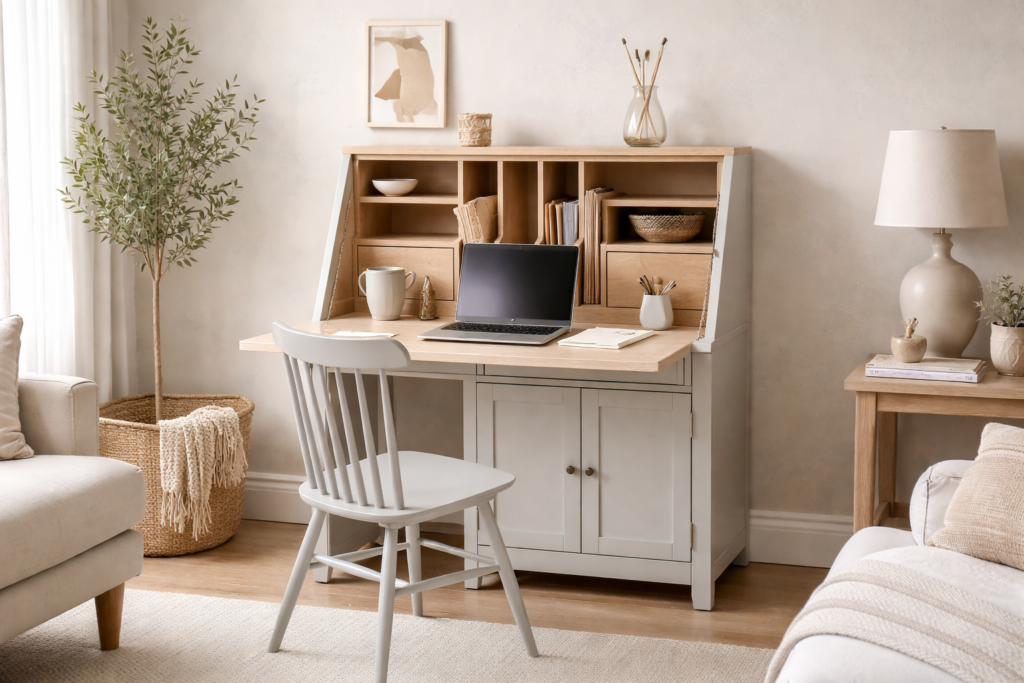
The secretary desk is arguably the original hidden home office. A hinged front panel folds down to reveal a writing surface, with cubbies and small drawers inside for stationery and documents. When closed, it looks like a cabinet or sideboard.
Modern interpretations of this classic design have updated the proportions to accommodate laptops and screens, and some now include built-in cable management. They tend to be more expensive than a basic folding table, but they offer genuine furniture-grade aesthetics and the satisfaction of closing the door on your working day — literally.
Best for: living rooms and bedrooms where appearance matters and you want a desk that doubles as a feature piece.
9. Windowsill and breakfast bar workstations
Sometimes the best desk idea for a small space is no desk at all. A deep windowsill, a kitchen breakfast bar, or a wide shelf fixed at working height can all serve as a temporary workspace with zero additional furniture.
This approach works well for occasional work — answering emails, taking calls, or quick admin tasks. For full working days, though, ergonomics become a concern. Breakfast bar stools and window seats aren’t designed for prolonged computer use, and working at the wrong height can strain your back, neck, and shoulders over time.
If you find yourself using these surfaces regularly, consider pairing them with a portable sit-stand desk for part of the day. Varying your position is one of the most effective ways to reduce discomfort when working from home.
Read more: 5 workspace wellness tips to boost comfort and productivity →
10. Freestanding folding sit-stand desks
This is where the categories of “folding desk” and “standing desk” converge — and for small spaces, it’s arguably the most complete solution.
A freestanding folding sit-stand desk doesn’t need wall fixings (so it works for renters), doesn’t occupy a permanent footprint (so your room stays flexible), and offers genuine ergonomic adjustment between sitting and standing heights (so your body stays comfortable over a full working day). When you’re finished, it folds flat and stores out of sight.
Unlike motorised standing desks, which are heavy, permanent, and dependent on mains power, a well-designed folding sit-stand desk is lightweight enough for one person to move, set up in seconds, and powered by nothing more than a simple mechanical adjustment.
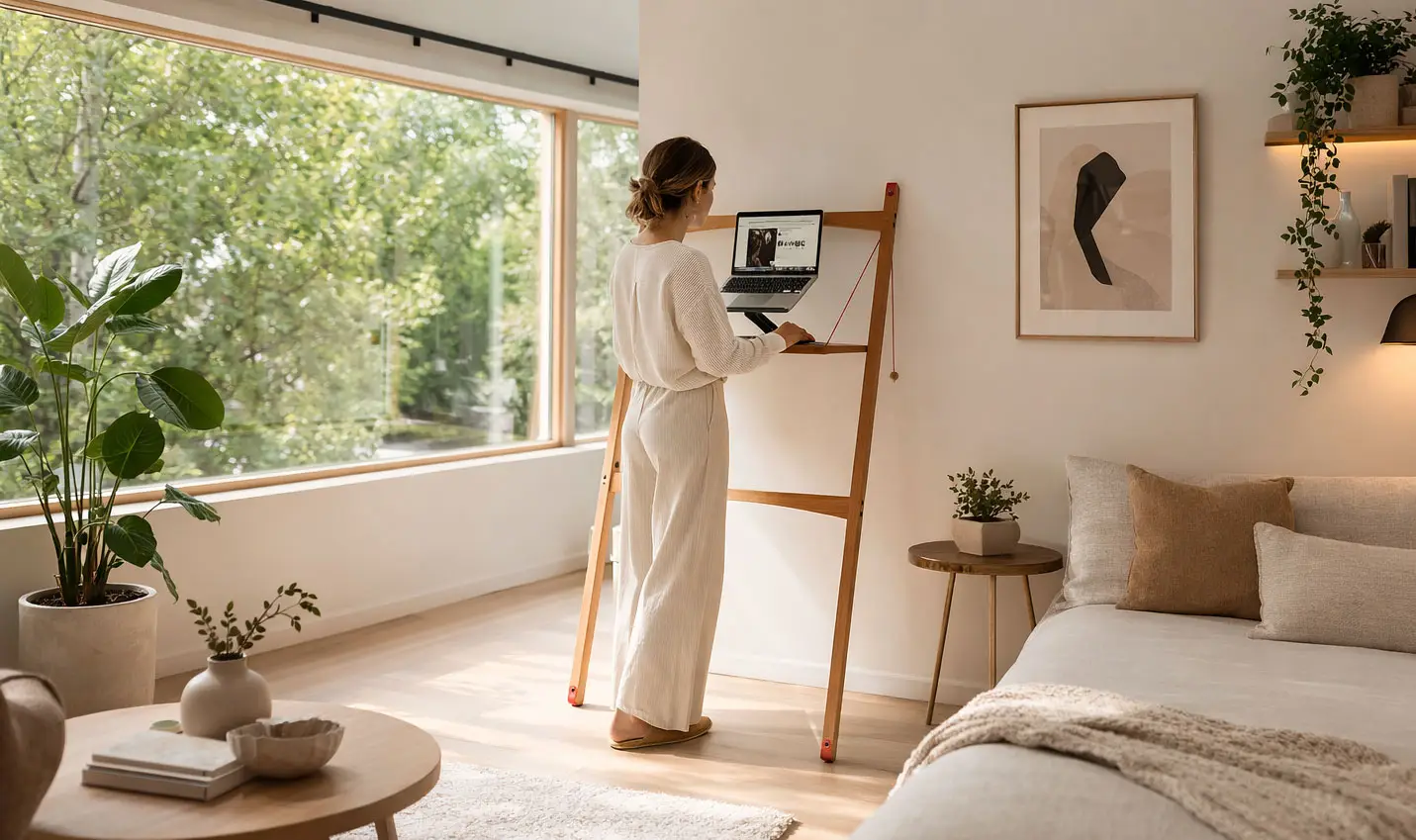
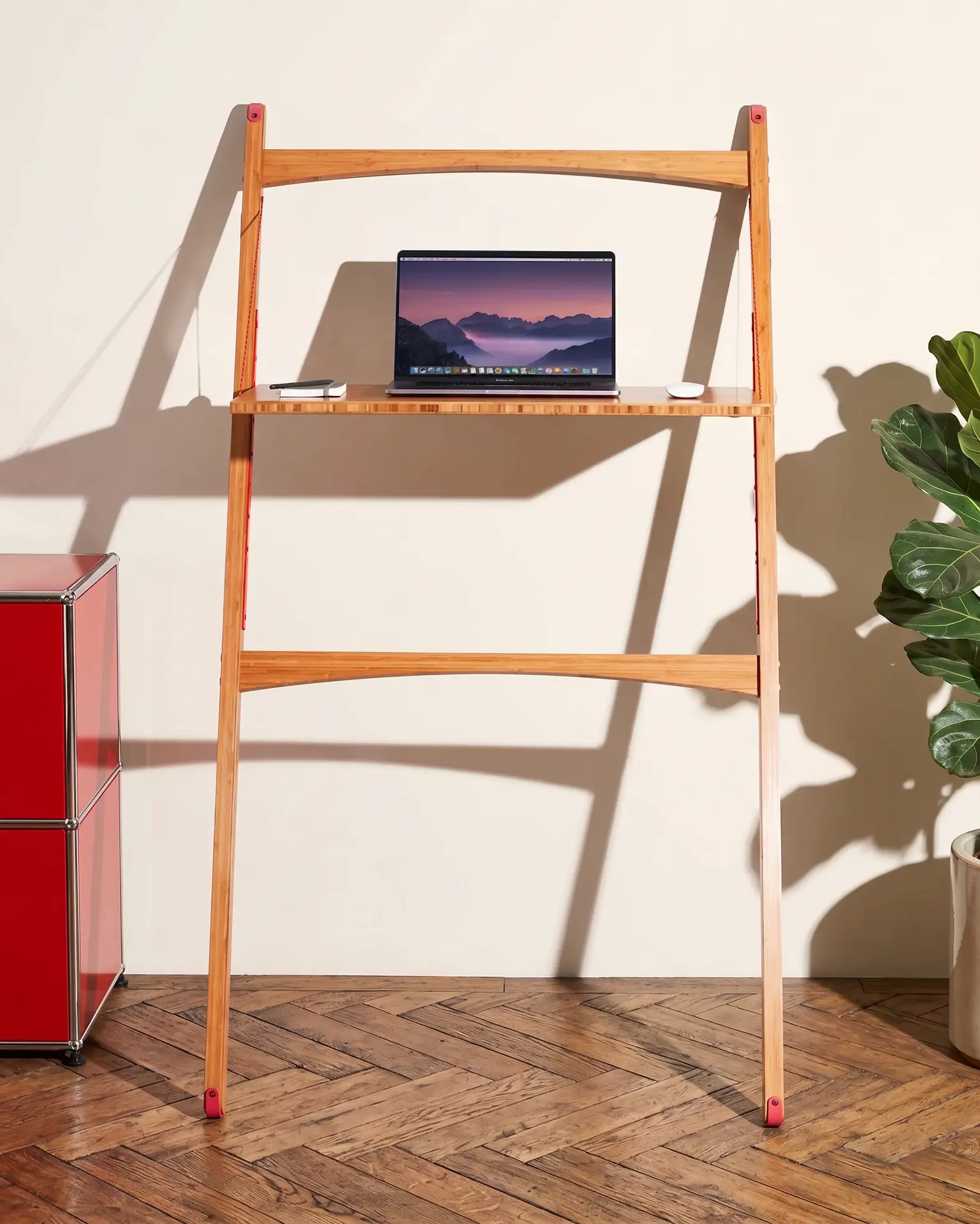
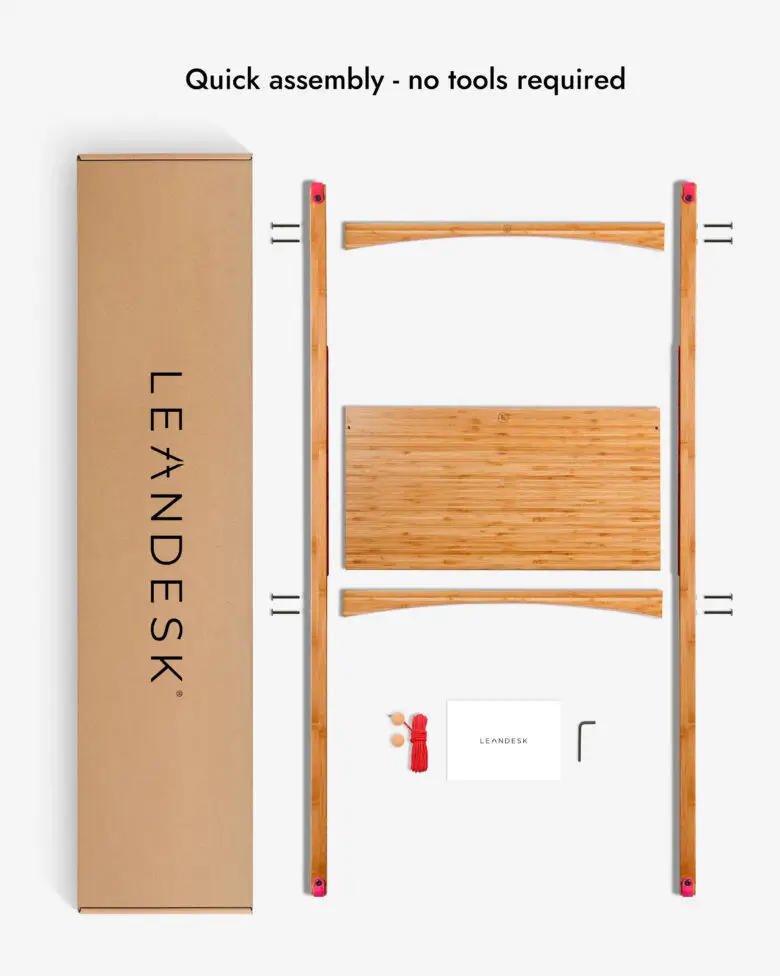
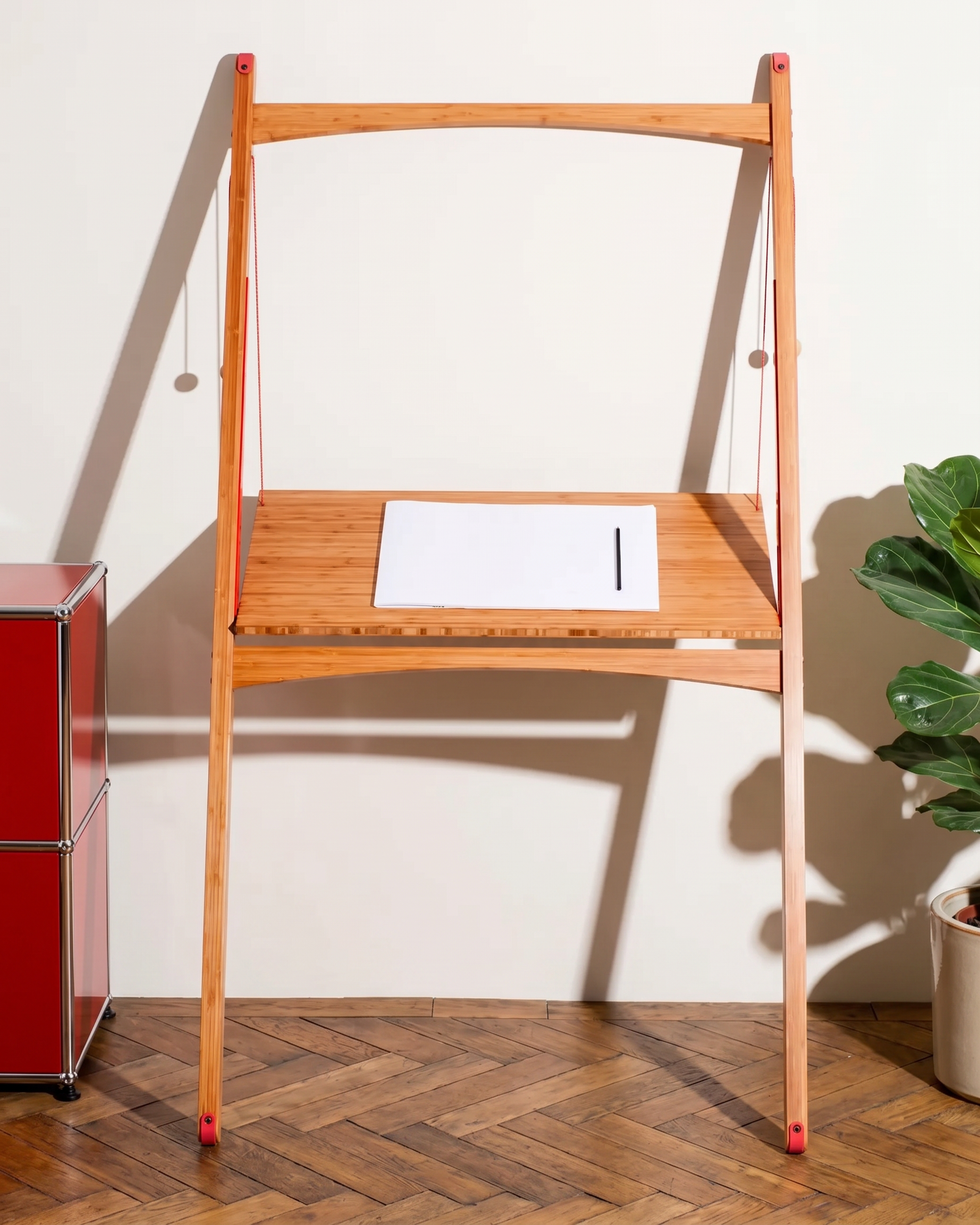
This is the category Leandesk was built for. Made from sustainably sourced bamboo with plastic-free packaging, it adjusts from seated to standing height using a rack, cleat, and Dyneema cord mechanism. It folds to 50mm flat. It supports 65kg. And it can be set up against any wall in your home — turning any room into an ergonomic workspace, and giving it back when the day is done.


In stock
Leandesk Bamboo Folding Sit-Stand Desk – Compact Standing Desk, Space-Saving Sustainable Design
Price range: £610 through £630
Leandesk is crafted for professionals who need a workspace as flexible and uncompromising as they are. A folding sit-stand desk that’s infinitely adjustable in height and angle, letting you work sitting or standing with ease. It folds to just 50mm for effortless storage, and is crafted from sustainable materials with ergonomic features designed to boost productivity and flexibility.